GUE Basic Fundamentals
The moment that changed everything my first dive into the underwater world.
Field transcript
Dive notes and observations
Global Underwater Explorers Fundamentals Course in Bali: My Experience at Noble Dive Center
In my GUE Double Primer I shared how I discovered Global Underwater Explorers and my first steps into the world of technical diving. This time, I want to take you with me on my journey through the Global Underwater Explorers Fundamentals course — a transformative experience that took me from anxious traveler to more confident diver.
The Journey to Bali
The course started on the 8th, so I booked a flight on the 7th. Of course, things didn’t go smoothly: I woke up late, went to the wrong terminal, and eventually had to rush to KLIA2 with heavy luggage that forced me to pay extra fees. Luckily, I made it through security just in time to board.
Exhausted after a long work week, I slept through most of the flight. My first impressions of Bali were filled with curiosity — part of me worried it would be nothing more than an “influencer island.” Yet, arriving at Denpasar Airport was surprisingly smooth. The visa on arrival process was quick, and I was soon on my way.
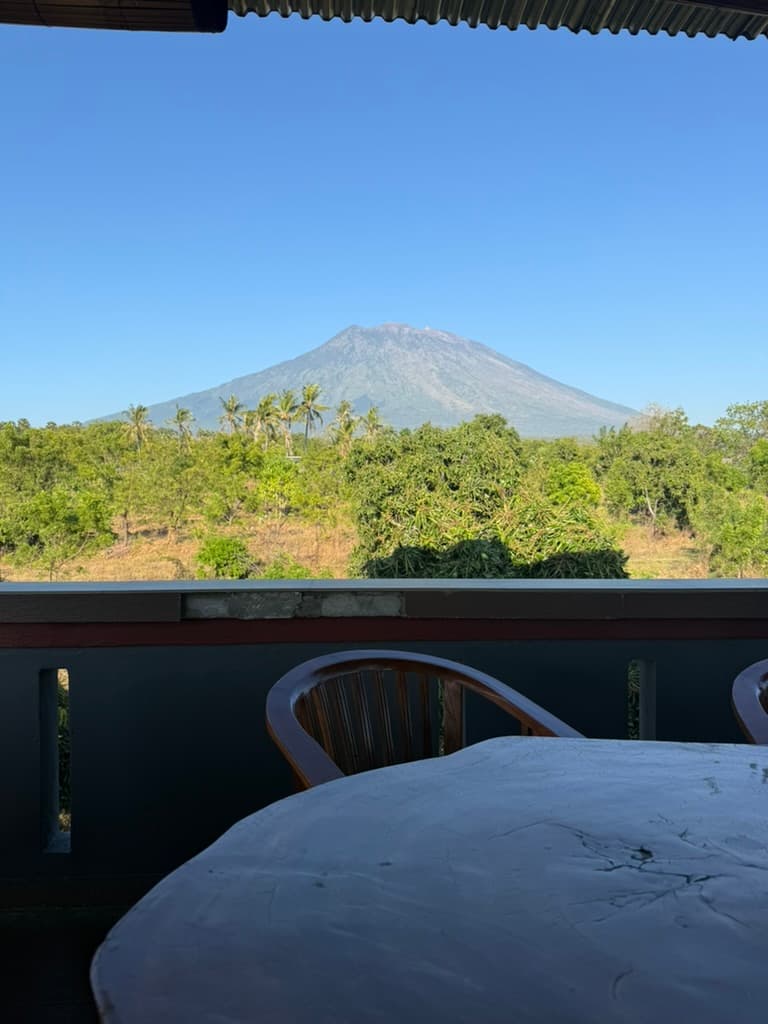
The drive from the airport to Tulamben, the village where the dive center is located, took about four hours. I had pre-booked a driver, who turned out to be friendly and welcoming — a nice start to the adventure.
Arrival at Noble Dive Center
Reaching Noble Dive Center, I was warmly greeted and introduced as Gemma Thomas’s trainee. The dive shop had a welcoming, family-like atmosphere. My equipment was placed in the designated prep area, and one of the staff members guided me to my resort room.
Later, while checking my scuba gear, I met Heru, a kind soul who immediately helped me set up. At that time, my regulator configuration wasn’t GUE-style yet (still primary/octopus instead of long/short hose). Heru patiently walked me through the adjustments, and we bonded over conversations about diving.
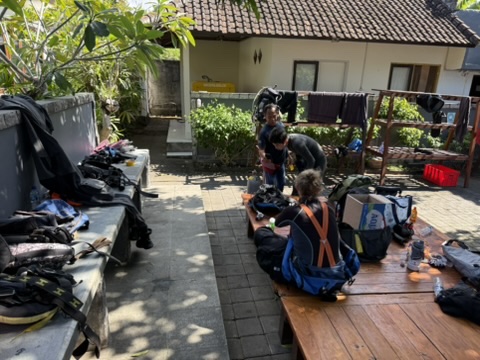
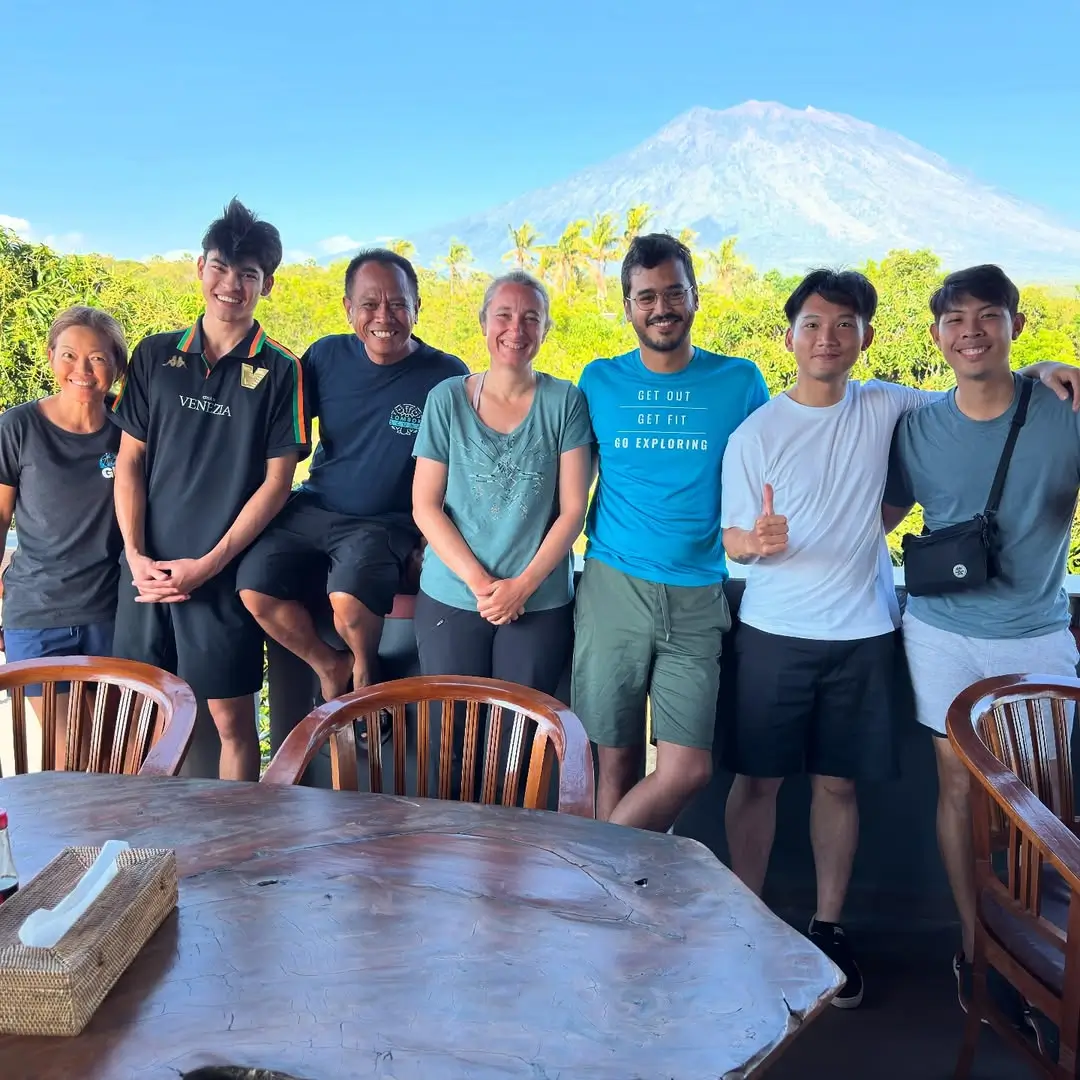
Soon after, Gemma Thomas returned from a session with other Fundamentals students, and I met the group — including Daniel Sun . Later that day, my course buddy, Thomas Tran, the first Global Underwater Explorers diver from Vietnam arrived and we had dinner all together.
Day 1 – Theory & Kicking Techniques
The first morning began with a light theory session. Most of the heavy theory was already covered in our e-learning modules, so this was more of an introduction.
Afterwards, we grabbed our snorkels and masks for pool training. This was all about kicking techniques. For the first time, I learned proper step-by-step methods for frog kick, flutter, modified frog, modified flutter, back kick, and helicopter turns.
It was tough. My fins and suit didn’t help, and practicing kicks on the surface in a pool made it even trickier.
Later, we geared up and moved to the sea. Gemma Thomas and Daniel Sun set up a square underwater, and we swam in circles, practicing kick after kick. It felt repetitive, almost like “running in circles,” but that repetition drilled the skills into us.
Day 2 – Ascents and Descents
Day two was focused on buoyancy control — my personal weak spot. I had previously failed the Confédération Mondiale des Activités Subaquatiques 3★ exam because of buoyancy issues, so this session felt crucial.
We practiced ascending and descending repeatedly between 6m and 3m. With a drysuit, controlling the air and dump valves required precision. At times, I felt I was improving; at others, I struggled to stay in trim. Still, it was progress.
Day 3 – SMB Deployment & Real Diving
The third day added excitement: deploying an SMB (Surface Marker Buoy) the Global Underwater Explorers way. Unlike my old octopus-based method (risky, since the SMB line could entangle), the Global Underwater Explorers system ensures safety and stable buoyancy during deployment.
Gemma Thomas first demonstrated on the surface, with Daniel Sun supervising. I appreciated having multiple instructors’ perspectives — it sped up my learning. Once in the sea, we practiced over and over until it became smooth and safe.
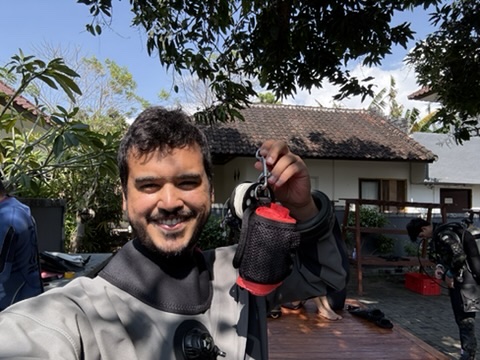
After training, we were finally allowed to explore. Within the limits (not exceeding 21m), we planned a dive, executed it, and even had time to visit the USAT Liberty wreck.
Thomas Tran had dreamed of this wreck for years. Personally, I was a bit disappointed — it wasn’t as impressive as French wrecks like Saumur or L’Astrée. Still, it was a milestone dive and an important bonding experience with my buddy.
The Drysuit Challenge
During the wreck dive, my drysuit gave me trouble. Gemma Thomas took me aside for extra drysuit drills: adding air, then dumping it while inverted, learning to feel the air in my feet and release it. It was uncomfortable but necessary.
That awareness — controlling micro-adjustments — became a breakthrough moment.
The Fundamentals Success
By the end of the course, we had practiced and achieved all the key Global Underwater Explorers skills:
- Staying perfectly on trim
- Maintaining neutral buoyancy
- Controlled ascents and descents
- Valve drills
- Mask removal drills
- S-drills
- Mastering all kicking techniques
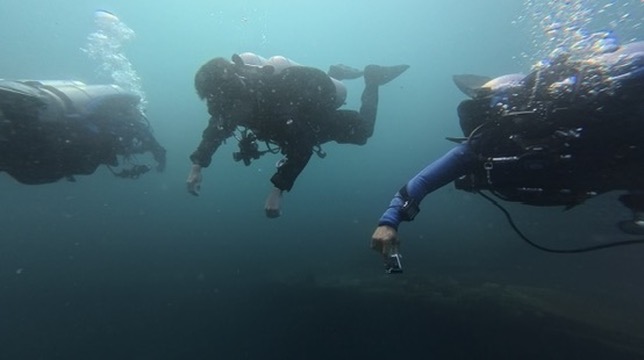
It was exhausting, challenging, and sometimes frustrating — but ultimately, it was a success.
Deep Primer Extension
Because I hadn’t passed my Confédération Mondiale des Activités Subaquatiques 3★, I couldn’t dive to 60m with air. To join other Global Underwater Explorers divers on deeper dives, I needed the Global Underwater Explorers Deep Primer course.
Normally, it’s limited to three students, but luckily one participant dropped out due to injury, and I got a spot.
We started with theory about depth, gases, and planning. Then we headed back to the drop-off site for progressive depth training: ascents/descents at 6m, then 15m, then 24m.
The real challenge came with planning dives as a team — respecting turn pressures, depth limits, and communication. We explored marine life, managed mistakes (like briefly losing a teammate), and learned to correct them quickly.
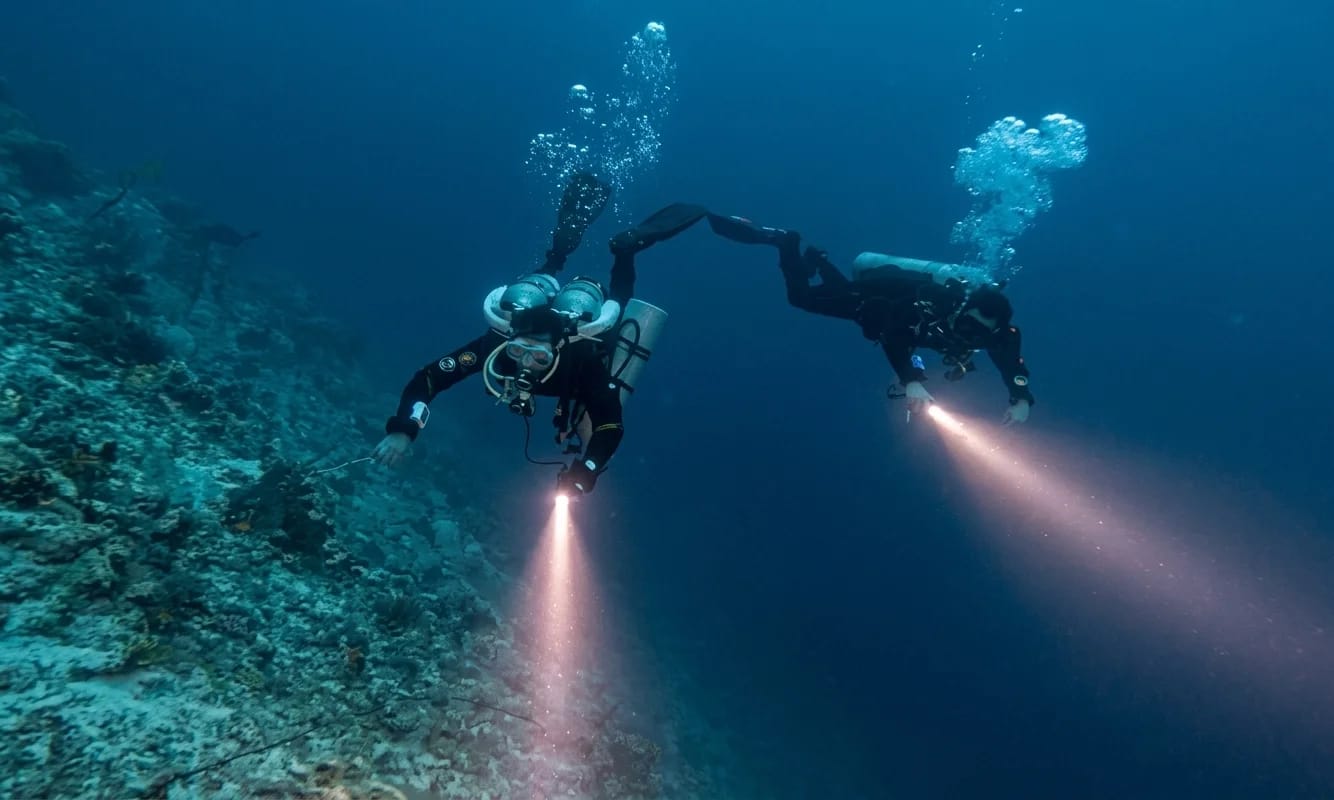
The highlight was returning to the another wreck much more impressive than the liberty with a solid plan: first dive for reconnaissance, second dive for targeted exploration. This time, team coordination was smooth, communication was clear, and ascents were clean.
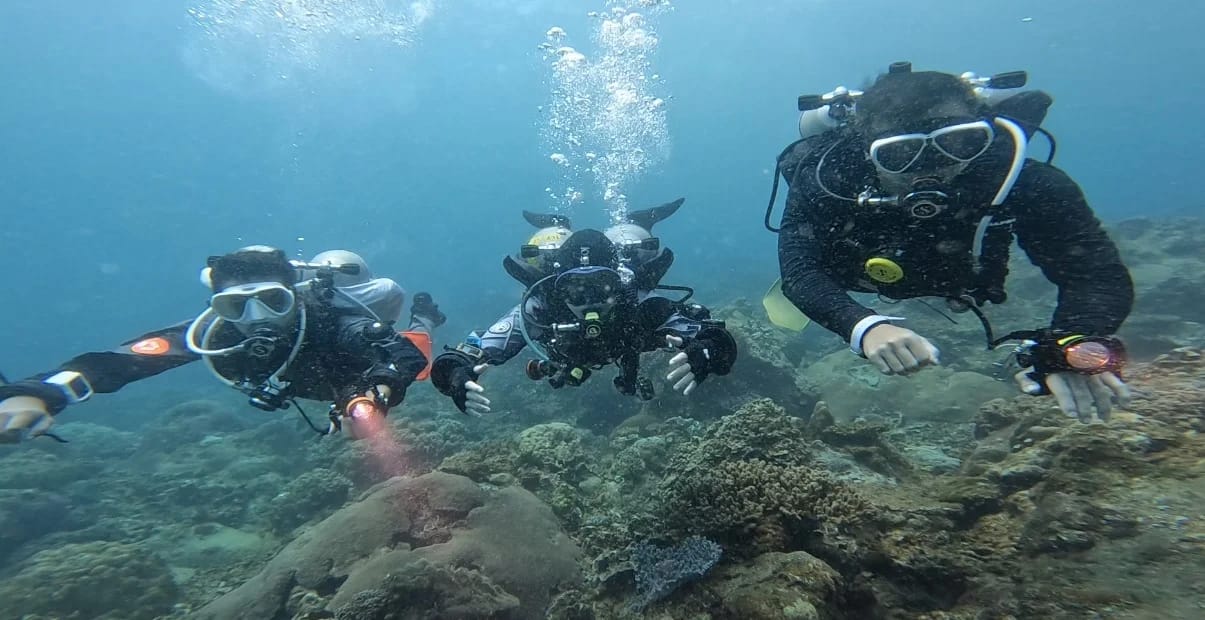
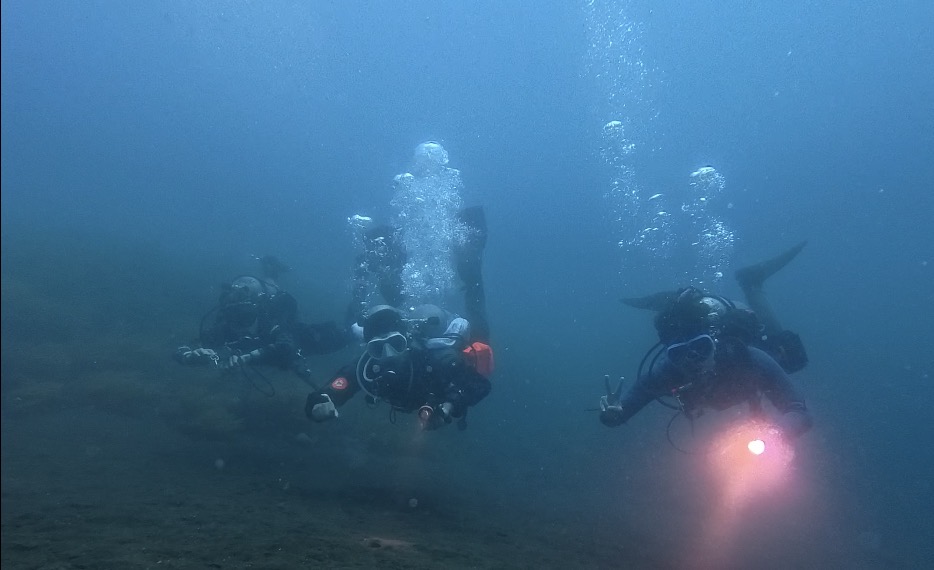
That evening, after a delicious fish dinner, we celebrated as a team. Gemma Thomas even captured photos and video of us underwater — memories that will last forever.
Final Thoughts
Taking Global Underwater Explorers Fundamentals (and the Deep Primer extension) in Bali was not just about improving my skills — it reshaped how I think about diving. From kick efficiency to safety drills, from struggling with buoyancy to deploying SMBs confidently, I came out more aware, more disciplined, and more connected with the diving community.
For anyone serious about progressing in scuba diving — especially diving techniaques — I cannot recommend this course enough. The Global Underwater Explorers training system made it an experience I’ll never forget.
Keep reading