GUE DPV Diver 1 - Adding speed without missing control
an amazing experience first time feeling speed in the water and having super fun experience with DPV.
Field transcript
Dive notes and observations
GUE DPV1 Course Reflection
The DPV1 class was not just another certification for me — it was the continuation of a journey that began during a night dive in Tioman.
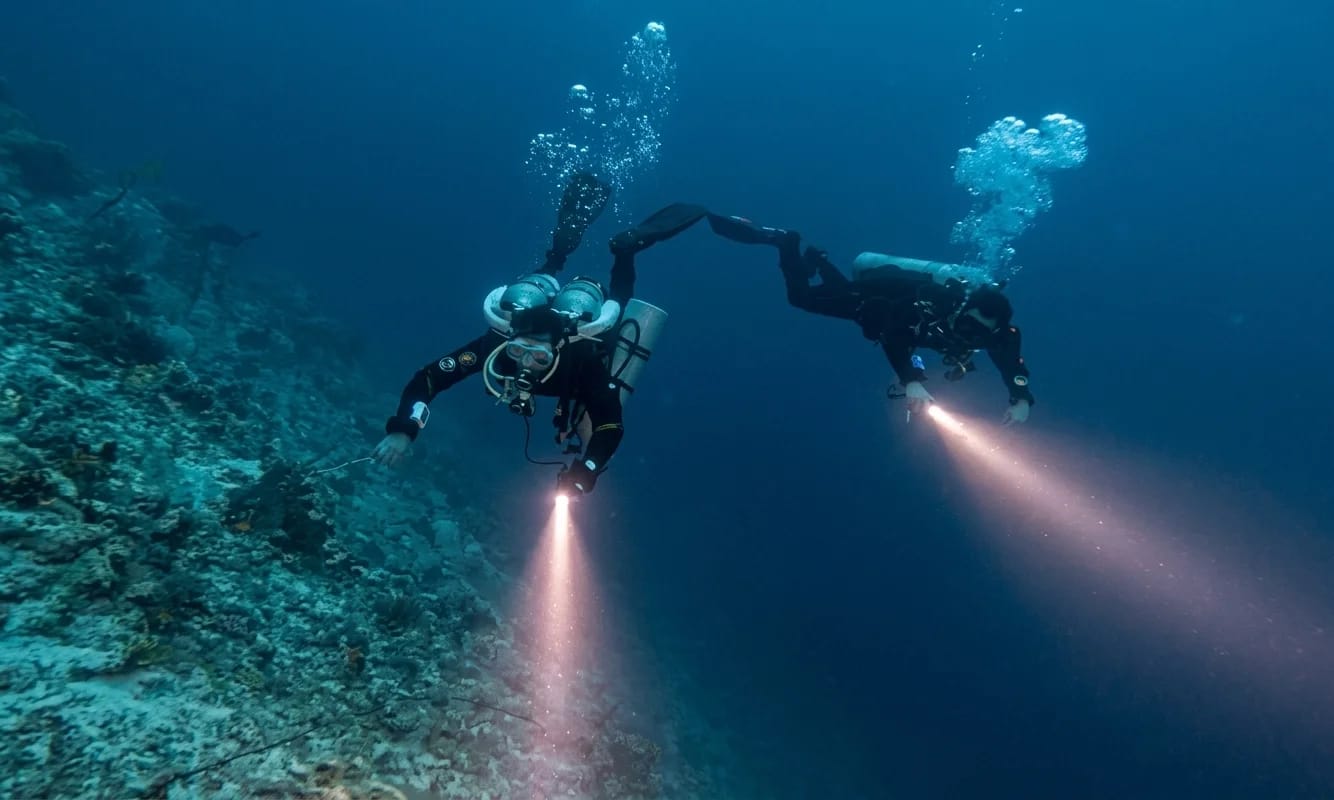
That night, I was diving with Jeeven and Sheena. At the time, they were the only ones certified to use DPVs, and to reach the Marine Park, they towed us. I still remember the sensation clearly: effortless propulsion, smooth team movement, controlled speed in the dark water.
It wasn’t about going faster.
It was about moving with intention.
Day 1 — Foundations
The first day combined theory and initial in-water practice.
We covered:
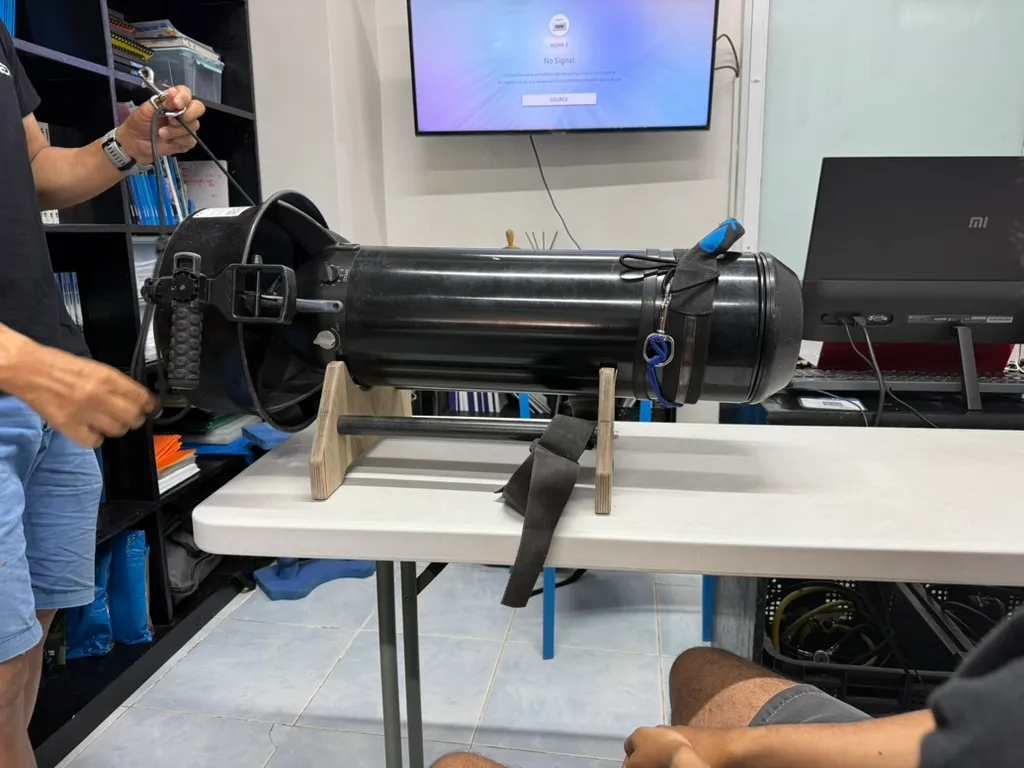
- Configuration and setup
- Burn time and battery management
- Failure protocols
- Team positioning
- Environmental awareness
The first time applying thrust underwater immediately showed how demanding DPV diving is. Trim, buoyancy, and posture must be precise. Any imbalance is amplified.
You don’t fight the DPV — you align with it.
Day 2 — Trim and Control
Day two focused heavily on body position and trim while scootering around the island.
With propulsion:
- Head position matters
- Arm tension matters
- Leg placement matters
- Micro buoyancy adjustments become critical
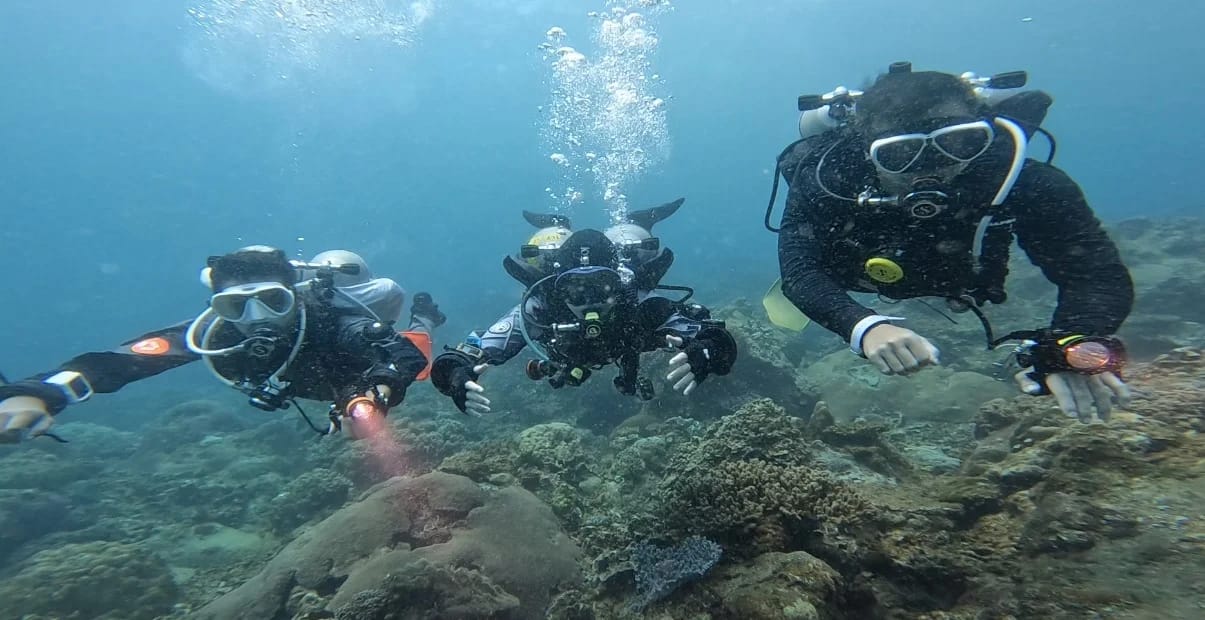
Working alongside Jeeven and Sheena, formation discipline became central. Distance control, visual contact, and awareness must remain constant.
DPV diving magnifies both strengths and weaknesses.
Day 3 — Towing & Teamwork
Towing exercises introduced a new layer of complexity.
Managing a teammate under propulsion requires:
- Stable trim under load
- Speed control
- Clear communication
- Anticipation
Momentum adds responsibility. Every action must be controlled and deliberate.
Day 4 — Drills & Momentum Management
The final day focused on higher task loading:
- S-drills under propulsion
- Collision scenarios
- Controlled stops
- Emergency procedures
Managing gas sharing while controlling thrust requires composure and efficiency. Collision drills reinforced how important positioning and anticipation are when momentum is involved.
Instructor Feedback
At the end of the course, Gidion highlighted my strong commitment to learning and noted significant improvement throughout the class.
He mentioned:
- Very good foundational skills
- Good stability and propulsion
- Solid understanding of dive theory, gas management, and DPV burn time
- Strong equipment knowledge
He encouraged me to:
- Refine drill sequencing for smoother execution
- Improve positioning to enhance team communication
- Be slightly more proactive in taking action
He also emphasized my positive attitude, professionalism, and openness to feedback — qualities I strive to maintain in every dive.
What DPV1 Taught Me
DPV1 is not about speed.
It is about:
- Control
- Efficiency
- Team coordination
- Energy management
- Precision under propulsion
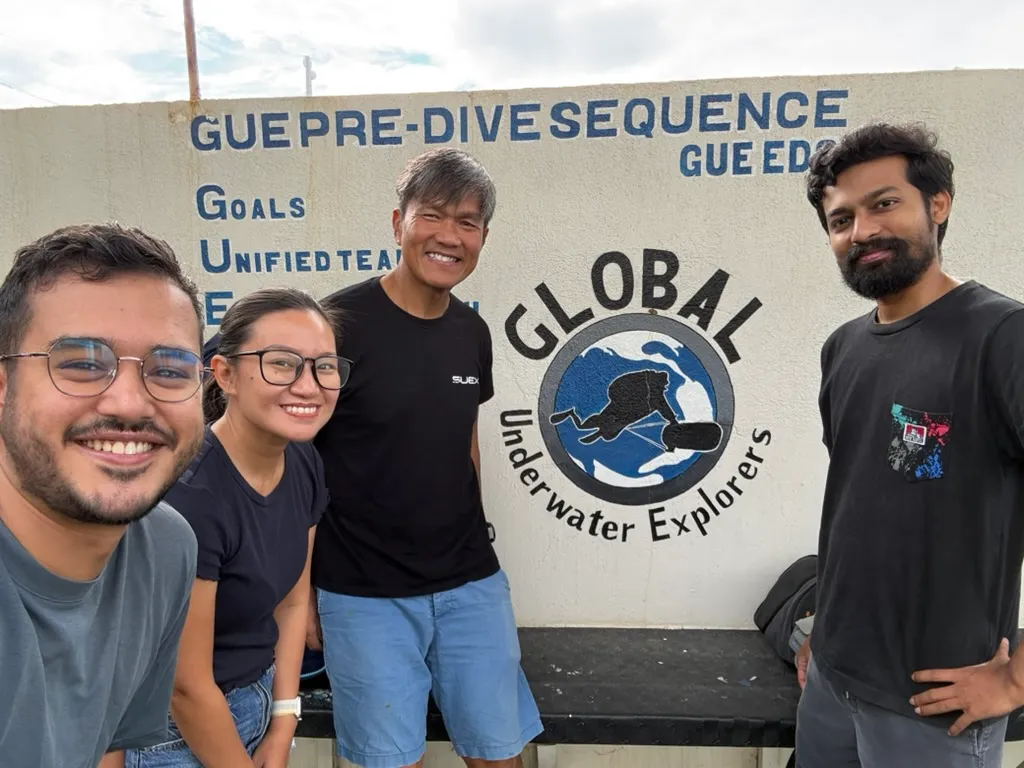
Training with Jeeven and Sheena under Gidion’s guidance reinforced something fundamental: technical diving is structured, disciplined teamwork.
The night I was towed across Tioman was the spark.
DPV1 turned that spark into direction.
Keep reading