Discover CCR Diving Triton JJ first experience
My first CCR experience in Cebu testing the Triton Mccr and the Jj Ccr, and what I learned about fundamentals, buoyancy, and rebreather diving.
Field transcript
Dive notes and observations
Discover CCR Diving: My First Experience With the Triton mCCR and JJ-CCR
During a recent trip to Cebu for our DPV class, Jeeven SETHU and I decided to take a step into the world of Closed Circuit Rebreathers (CCR). With friends already diving the Triton mCCR and strong recommendations for Jong Moon LEE at Ocean Player, we asked if we could try both the Triton mCCR and the famous JJ-CCR. Jon accepted, giving us the chance to experience two very different CCR systems.
Understanding the Basics: CCR Theory
We began the day with a clear and structured theory session. JM walked us through the fundamentals of how a CCR works:
- Removing CO₂ from exhaled gas
- Adding oxygen to maintain optimal PPO₂
- Recycling breathing gas in a closed loop
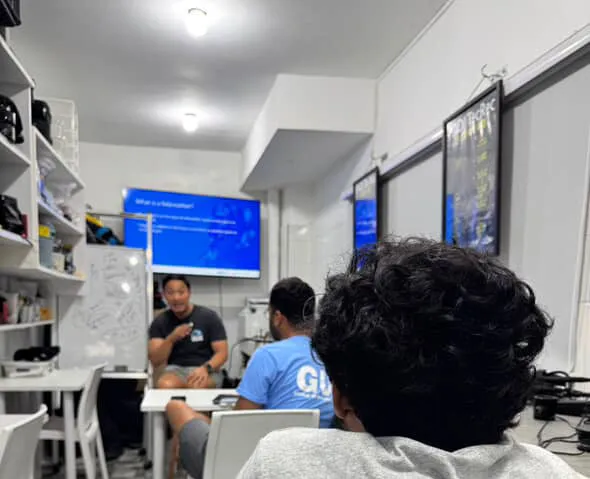
It was interesting to learn that despite the different designs, all CCRs share the same core function.
Triton mCCR vs JJ-CCR: Two Different Approaches
Triton mCCR
- Manual oxygen management
- Chest-mount configuration
- Simple and modular design
JJ-CCR
- Electronic oxygen control (eCCR)
- Backmount configuration
- Widely used in Global Underwater Explorers and major expeditions
After JM prepared the scrubber, he showed us how to assemble both units. The Triton mCCR was straightforward, while the JJ-CCR—integrating doubles and the rebreather—was more complex.
First Breaths on a CCR: Pool Session
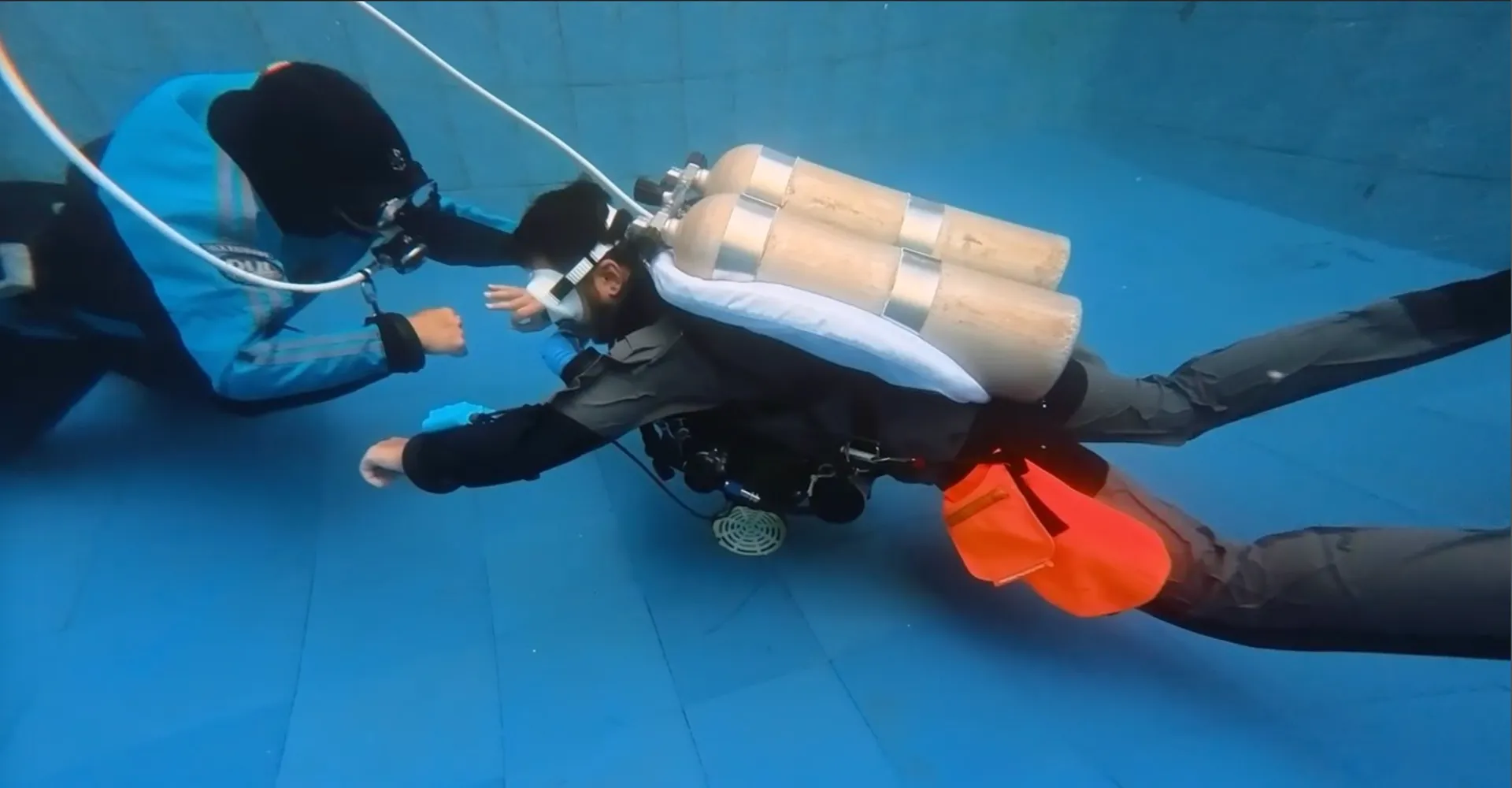
Starting With the Triton mCCR
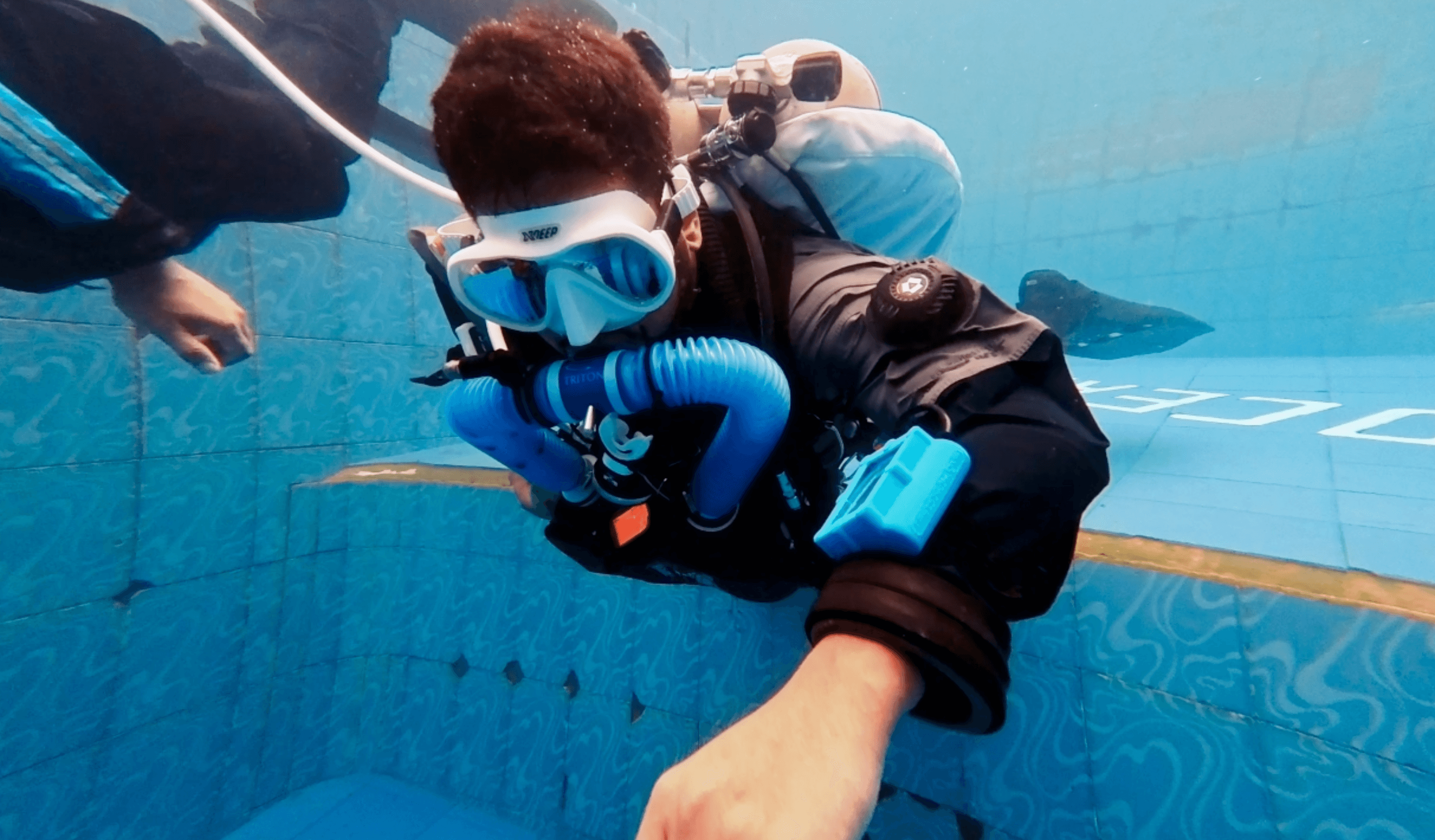
At the surface, manually stabilizing the PPO₂ was manageable. But once in the water, things became overwhelming. Injecting oxygen increased the loop volume, causing buoyancy changes and forcing constant adjustments. Managing PPO₂, buoyancy, and loop volume simultaneously felt like juggling too many tasks at once—especially while feeling slightly sick and struggling to equalize.
Switching to the JJ-CCR
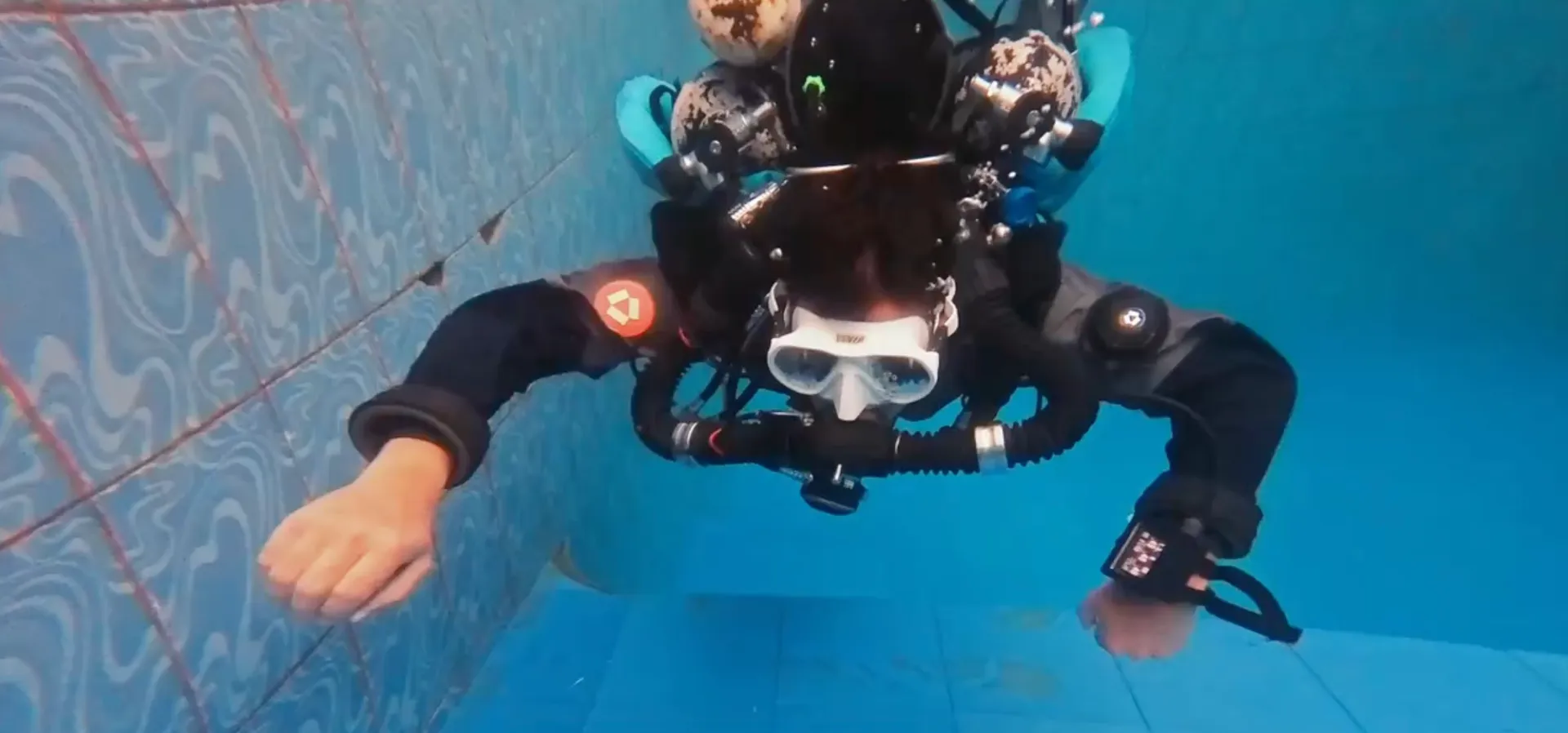
Moving to the JJ-CCR changed everything. The electronic control made PPO₂ management feel natural. The HUD gave instant feedback, and I only had to focus on buoyancy and loop comfort. Even though loop volume was still something to manage, the overall experience felt smoother, more stable, and far more comfortable.
What This Experience Taught Me
This CCR discovery made me realize something important: I need to master my fundamental skills before taking on more complex equipment. Without solid trim, buoyancy, and drysuit control, adding a CCR becomes overwhelming.
My focus moving forward:
- Improving buoyancy control
- Maintaining consistent trim
- Mastering drysuit management
- Building confidence and calm underwater
Thank You to the Ocean Player Team
I want to give a huge thank you to Ocean Player team, especially Jong Moon LEE, who graciously guided us through this discovery session. A special thanks as well to Amy Ka 현경 and Minsu Park for their warmth, support, and hospitality.
This experience didn't just introduce me to CCR diving—it reminded me of the importance of strong foundations and continuous improvement in diving.
Keep reading