Road to the depths of Brunei - part 1 : GUE Tech pass
The Tech Pass with Gue is the first real step on the road to technical diving — but it's also a mirror. Three days in the water revealed not just how far I'd come, but exactly how much precision, teamwork, and humility i...
Field transcript
Dive notes and observations
Global Underwater Explorers Tech Pass
The Tech Pass with Global Underwater Explorers is the first real step on the road to technical diving — and, in many ways, an opening to an entirely new world.
I wanted to become a technical diver for one main reason: to extend my limits underwater. Staying longer and going deeper both serve a larger goal for me — exploring and creating photogrammetry models of deeper and larger wrecks.
My Previous Training — And Its Limits
Before Global Underwater Explorers, I had already completed advanced training with the Confédération Mondiale des Activités Subaquatiques, almost reaching the CMAS 3★ level.
This certification technically allows dives to 60 meters on air. With Advanced Nitrox, I was also qualified to conduct decompression dives using different oxygen mixes.
However, even though these depths clearly fall within what many consider technical diving, something was missing.
What Was Missing
- Structured and detailed dive planning
- Advanced gas management strategy
- Strong team organisation principles
- Task loading management at depth
Without these elements fully integrated, I would never have felt comfortable taking on demanding tasks such as underwater photography or photogrammetry during deep dives. The cognitive load would simply be too high.
Reaching depth is one thing.
Mastering the environment at depth is something else entirely.
That's where Global Underwater Explorers comes in.
The Global Underwater Explorers Tech Pass Standard
During the Tech Pass, I had to demonstrate all the skills from Global Underwater Explorers Fundamentals (Basic level) — but with significantly tighter tolerances:
- Maximum 1 metre depth deviation
- Maximum 20° trim deviation
- Precise buoyancy control
- Clean propulsion techniques
- Strict team protocols
The required precision changes everything. It transforms diving from simply being able to reach depth into truly controlling every aspect of the dive.
For those interested in the official performance requirements, they are detailed in the GUE standards documentation available on their website.
Training in the Pool
Before the class, I reached out to the Global Underwater Explorers Malaysia community to organise a training session. wai keen and Doen En both responded and joined me in the pool.
Our first attempt hit a snag right away — the pool team hadn't filled our tanks, so we had no choice but to postpone. The second session went smoothly. We geared up properly and ran through a solid set of drills:
- Basic 5
- SMB deployment
- Unconscious diver rescue
- Deco cylinder switch (for Doen En)
It was a really valuable session, especially as a warm-up right before the class.
Trip to Tioman
The Road
Since this wasn't my first time heading to Tioman, I figured it'd be straightforward — a bus to the jetty, then the ferry across. What I hadn't accounted for was a critical gap: there's no coordination between the bus and the ferry schedule. If the bus runs late, you miss the boat and have to wait until the next day.
And late it was — an hour and a half. I missed my original ferry by a comfortable margin. Fortunately, there was another one available and I made it just in time. A narrow escape, but I arrived at Pulau Tioman.
Meeting My Buddies
On the bus, I noticed someone had tried to reach me on Instagram — it turned out to be Siying wu, one of my dive buddies for the course. We got talking and agreed it would be a great idea to do a check dive before the class started. Unfortunately, by the time I'd sorted the bus and ferry delays, it was too late to squeeze one in.
We ended the evening with dinner instead — Siying wu, Gemma Thomas, and Nat, my three course buddies. I also found out I'd be sharing a room with Nat, which was a nice way to start building that team bond early.
Training With Gemma Thomas
Since I had a very positive experience during my Fundamentals Basic course, and knowing that Tech Pass evaluations with Gemma Thomas are known to be demanding, I chose to train with her again.
The class took place on March 27–29, 2026.
Two intense days.
Two challenging days.
A major milestone in my technical diving journey.
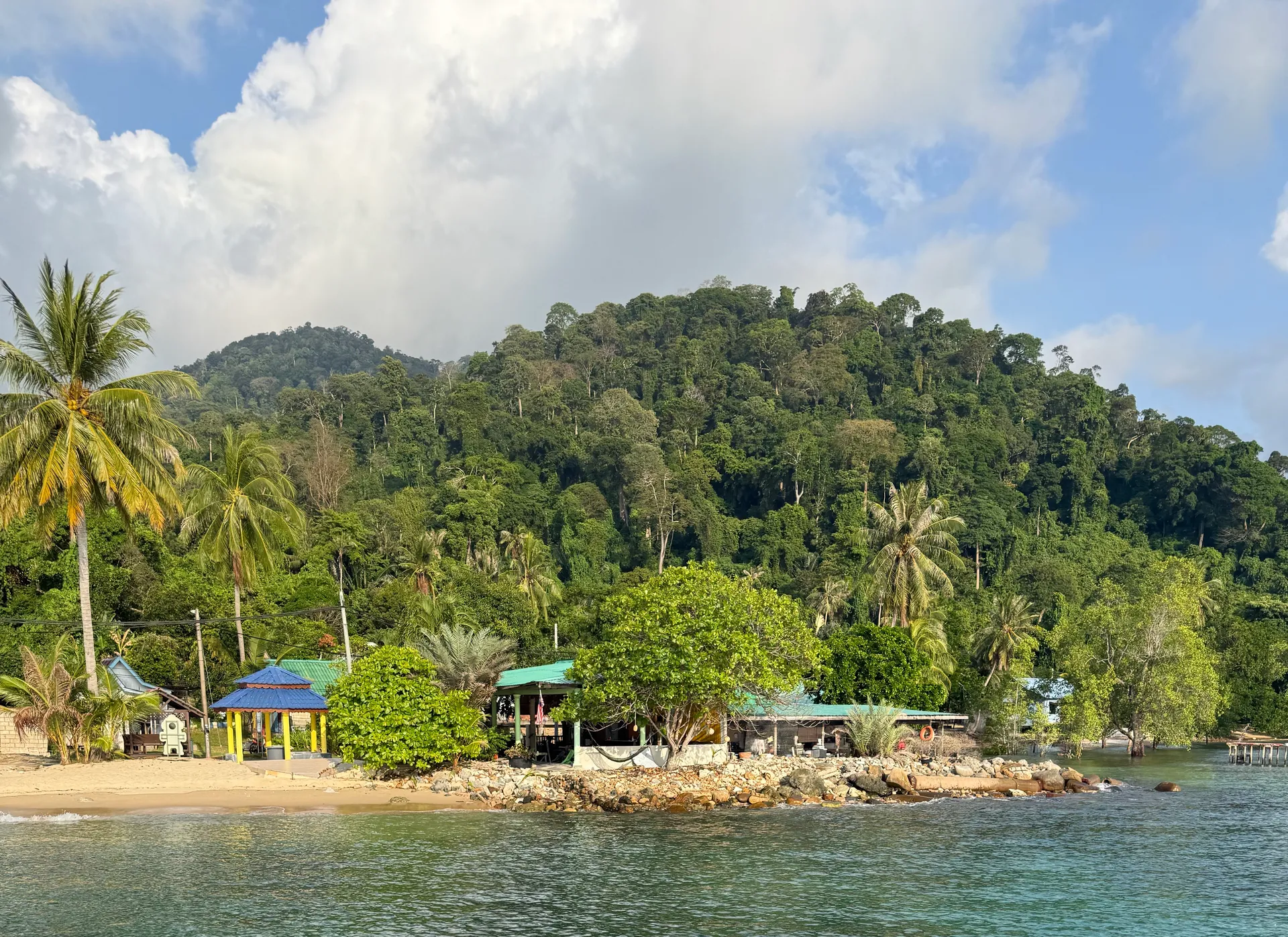
Arriving to Tioman, since I have been in Tioman already 2 times i tought my experience traviling there would be seemless, unfortunatly it wasnt the cas. the bus to arrive to late for the ferry and hopefully another ferry was at the same time and managed to take a place in it.
the ferry took as usual 2h30 to arrive. arriving there I had an amazing feeling a feeling of releave and peace being sourrouded by nature.
Day 1 — Humbling
The first day was a reality check. My trim was off, and I quickly realised I had made a tactical mistake: switching to a different equipment configuration right before a demanding evaluation was not a good idea. The new setup left me head-heavy and unstable, and without the ability to back kick reliably, I felt stripped of the control I had worked hard to build. I was too focused on managing myself to engage properly with my teammate — positioning was poor, and the overall picture simply wasn't there.
There's an uncomfortable but valuable lesson in that kind of dive: skill isn't just about what you can do in ideal conditions. It's about what survives when things change.
Day 2 — Finding Footing
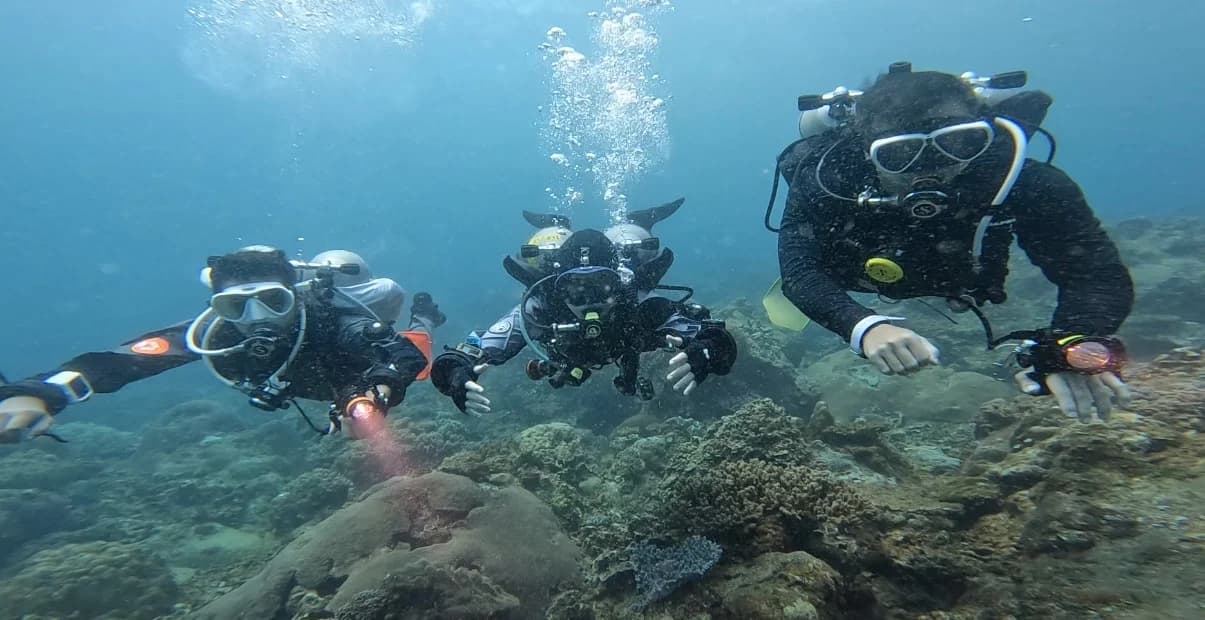
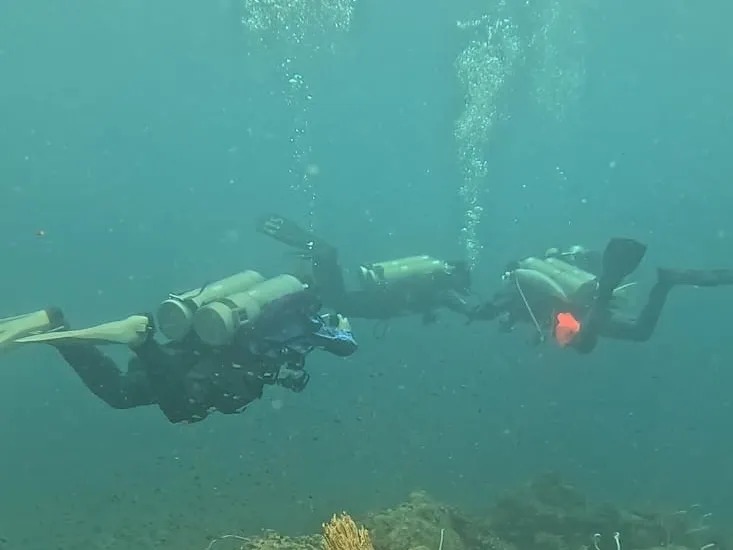
I made the call to return to my usual configuration. The difference was immediate. Trim improved, position stabilised, and — perhaps most importantly — I was able to actually dive with my teammate rather than just dive next to them. The communication and mutual awareness that technical diving demands finally started to come together.
We ran through unconscious diver scenarios both in the morning and afternoon, worked the Basic 5 and valve drills, and practised gas sharing and SMB deployment. Each exercise built on the last, and by the end of the day the fog of Day 1 had largely lifted.
Day 3 — Putting It Together
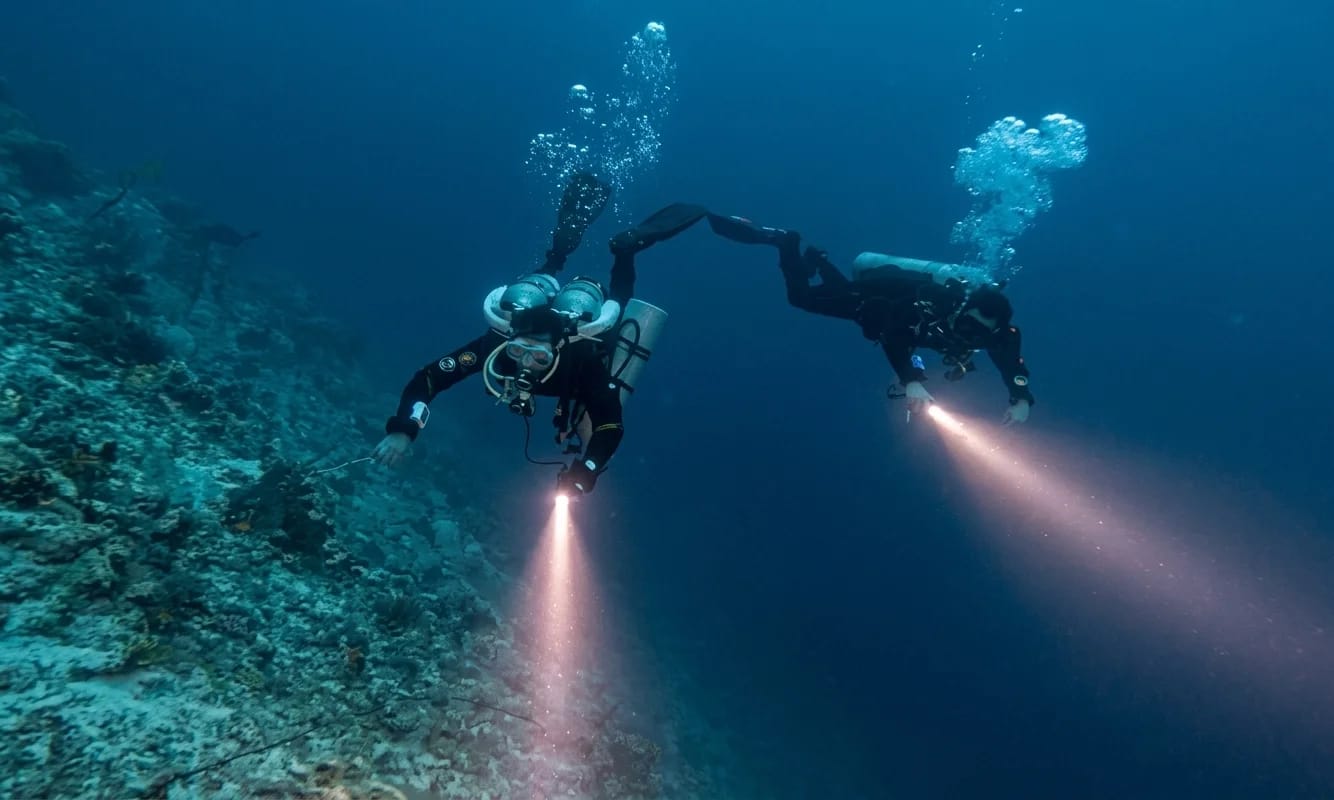
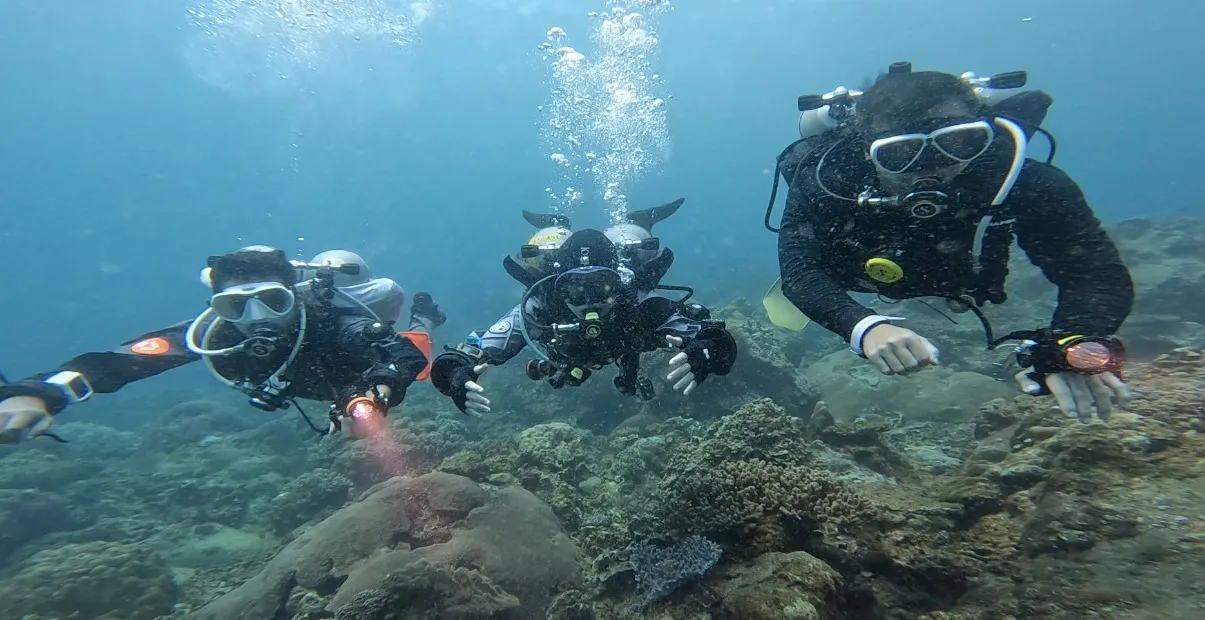
The final day was a fun dive — and it genuinely was fun. We descended to 28 metres and I felt the difference clearly: controlled ascent, good situational awareness, a successful SMB deployment. The skills that had felt shaky two days earlier now felt like they belonged.
That shift — from struggling to executing — is exactly what the Tech Pass is designed to produce. Not just theoretical knowledge of technical diving, but the embodied confidence to perform under real conditions.
Keep reading