Can You Learn 3D Photogrammetry as a Recreational Diver?
Most divers assume underwater photogrammetry is reserved for scientists and tech divers with expensive gear. I assumed the same — until I tried it, failed at it, and discovered it had nothing to do with cameras. Here's w...
Field transcript
Dive notes and observations
Short answer: yes. But not in the way you might think.
When most people hear the word "photogrammetry," they picture scientists in drysuits, cave divers with rig setups worth tens of thousands of dollars, and post-processing workflows that require a PhD to understand. It sounds like something built for researchers — not for someone who just wants to go diving on weekends.
I used to think that too. Then I actually tried it.
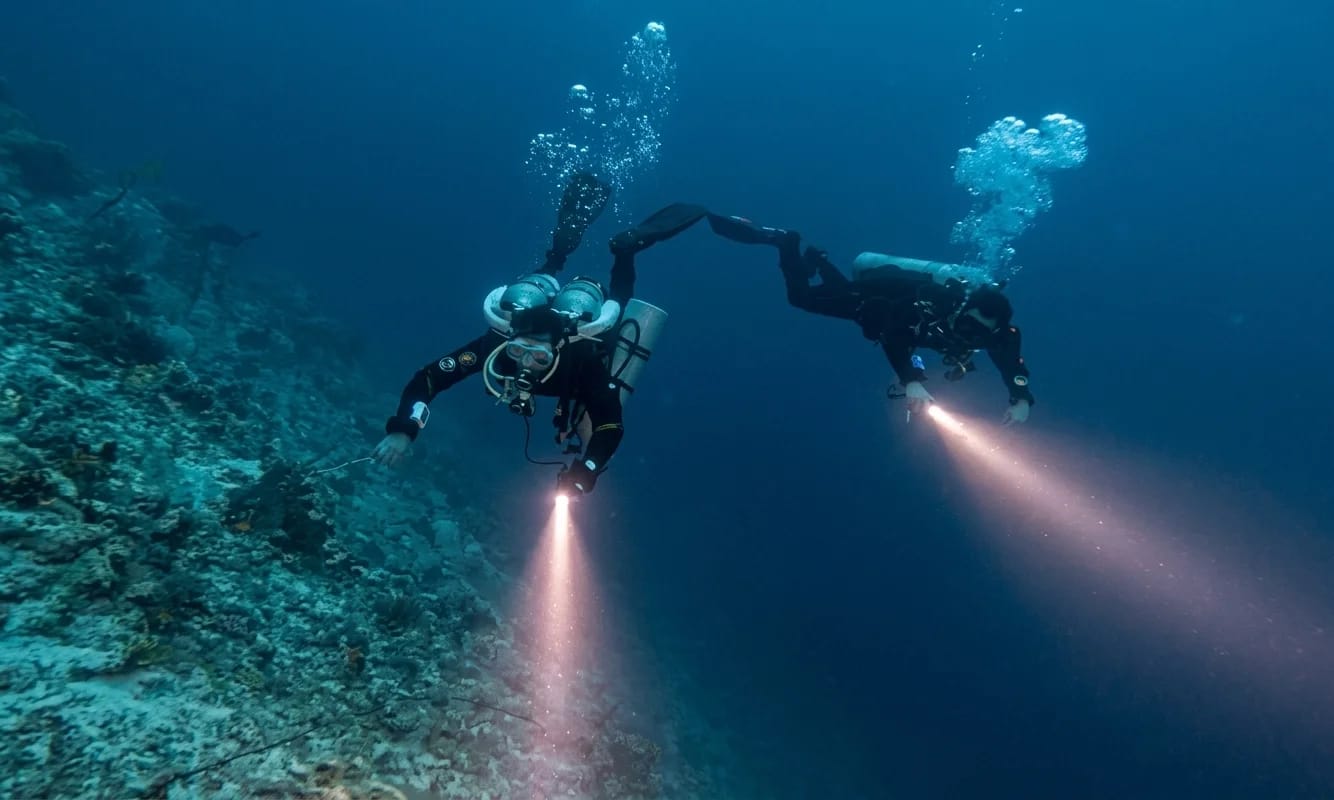
I'm a geek. I love technology. But when I first got into diving, the two worlds felt completely separate. I was just diving to dive — no agenda, no data, no goals beyond the next descent. That changed when I started training with GUE and began to understand what it means to dive with purpose. Structured dives with real objectives. A team working toward something. That shift in mindset opened a door I didn't know existed.
Photogrammetry walked through it.
What is underwater photogrammetry, really?
At its core, photogrammetry is the process of taking overlapping photographs from multiple angles and using software to reconstruct a 3D model of an object or environment. Underwater, this means swimming around a wreck, a reef, or even a single coral head, capturing images with enough overlap that software like Metashape can stitch them into something you can measure, share, and revisit without ever getting wet again.
But here's what nobody tells beginners: the photography is almost the easy part.
My first project was a failure — and that was the point
My first real attempt was at a marine park, shooting a shipwreck. I had my Insta360 Ace Pro 2, a plan, and a lot of enthusiasm. The result? A mess.
The mistake wasn't technical. It was psychological.
I got so focused on scanning — trying to capture perfect detail in a small area — that I forgot I was diving. My buoyancy drifted. My trim went sloppy. My situational awareness basically disappeared. I was so locked onto the task that the dive itself started to fall apart around me.
That failure taught me the most important lesson in this whole discipline:
Underwater photogrammetry is not about taking photos. It's about managing your diving skills under cognitive load.
When you add a task to a dive, you don't just add work — you divide attention. And if your foundational diving skills aren't automatic, there's nothing left in the tank for the task itself.
The moment it clicked
The real turning point came on a larger wreck. This time, I had to actually plan — figure out swim paths, coordinate with teammates, think about coverage zones and overlapping passes.
In theory, it went well. In practice, I bumped into people. I missed sections I had mentally marked. The execution didn't match the plan.
But something clicked anyway.
I realised that the divers who can execute photogrammetry well aren't doing anything magical with their cameras. They've just automated their diving to the point where their body handles the buoyancy, trim, and awareness on autopilot — and their brain is free to focus on the data.
Good photogrammetry is a byproduct of good diving. You can't shortcut the first thing to get the second.
Why this isn't just for scientists or technical divers
This is the misconception I most want to bury.
Yes, photogrammetry has deep scientific applications — reef monitoring, fish population surveys, coral growth tracking. Research institutions use it for serious conservation work. But none of that requires a deco stop.
You can do meaningful photogrammetry at 5 metres in calm, clear water with a GoPro in a standard underwater housing. That's it. No stage cylinders. No redundant computers. No technical certification.
With modern deep learning tools, even recreational-quality footage can be used for fish identification, habitat mapping, and environmental documentation. A recreational diver with a consumer camera and a decent workflow can contribute real data to real science.
The barrier isn't equipment. It isn't depth. It isn't certification level.
The barrier is consistency — and the willingness to practice.
What you actually need to start
Let me be direct: a GoPro with an underwater housing.
That's the honest answer. Not a mirrorless camera in a custom housing. Not a twin-strobe lighting rig. Not the latest action camera. A GoPro. The one you might already own.
The software side has a learning curve, but tools like Metashape are well-documented, and there's a growing community of people doing exactly this kind of work. You don't need to master the software before you get in the water — in fact, I'd recommend the opposite.
Start simple. Start imperfect. Start now.
How to actually build the skill
Here's what I'd tell a beginner who's nervous about trying:
On land first. Find a tree. Walk around it with your phone, taking overlapping photos every 10–15 degrees. Import them into Metashape. Watch the software try to reconstruct it. It probably won't be perfect. That's fine — figure out why.
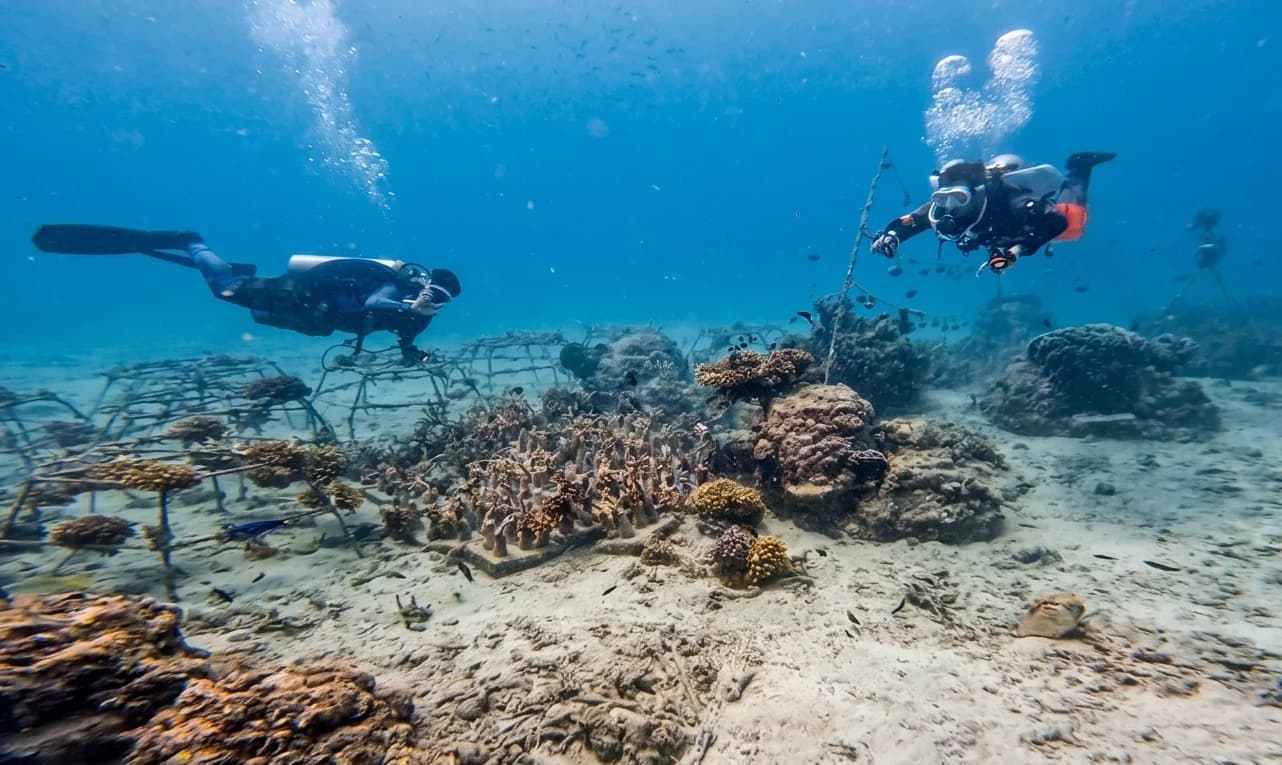
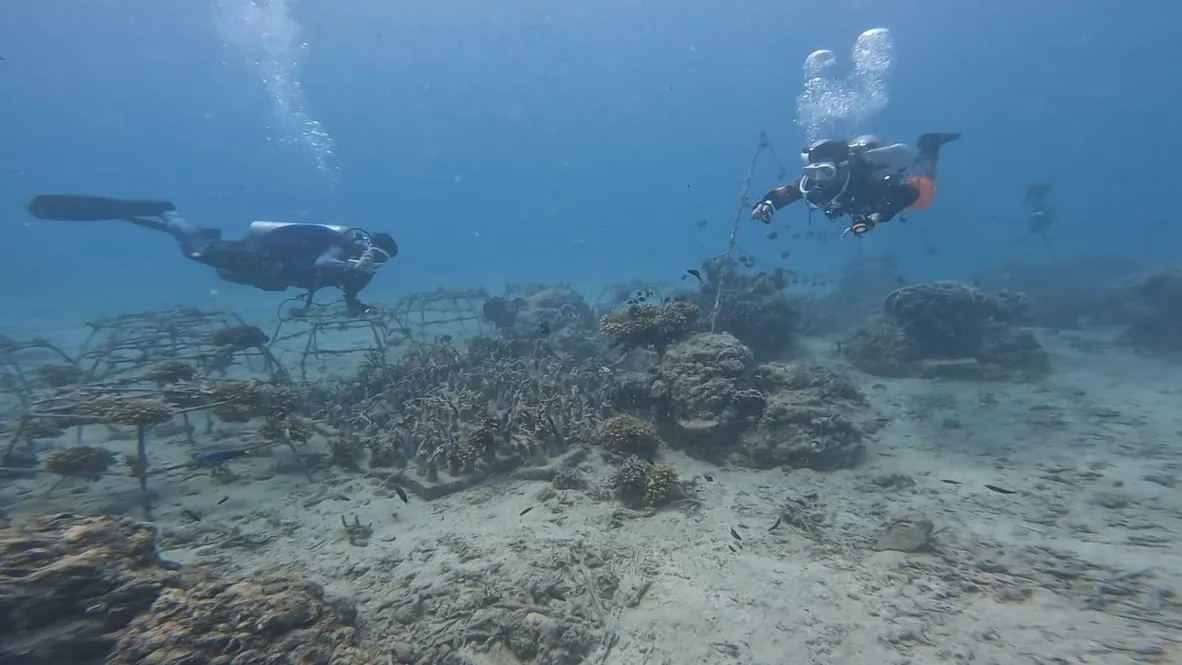
Then underwater, small. Pick one object on your next dive — a buoy, a rock, a small section of reef — and spend 5 minutes doing a proper photo pass. Don't try to capture everything. Just practice the movement, the overlap, the coverage discipline. Exemple project Phuket Bloc - artificial reef modules
The real learning happens in the gap between what you intended to capture and what the software actually has to work with. Every failed reconstruction tells you something: coverage was too thin, overlap was insufficient, movement was too fast, angle was too shallow. Each failure is a specific lesson.
And critically — each lesson makes you a more aware diver, not just a better photographer.
What a good photogrammetry dive actually looks like
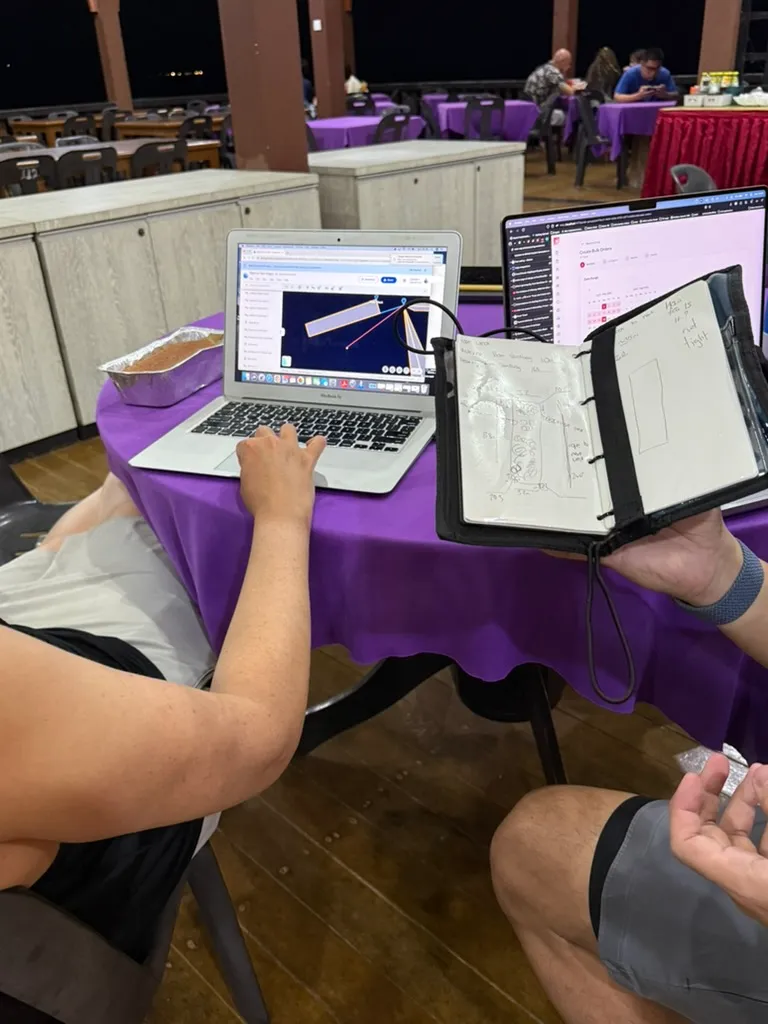
A good dive is well-planned. Every teammate knows their role and their zone. The swim paths are agreed before the descent. The objectives are clear and realistic.
And then — ideally — everything runs as expected. No one gets hurt. No objectives get missed. The data is clean.
That level of execution doesn't come from better gear. It comes from the kind of pre-dive discipline that most recreational divers never develop because they've never had a reason to. Photogrammetry gives you the reason.
What it changed beyond the projects
Here's something I didn't expect: even on dives where I'm not doing any photogrammetry at all, I dive differently now.
I think before I enter the water. I have a clear sense of what I'm doing and why. I'm more spatially aware, more intentional, more structured. I still have a tendency to get overly task-focused — something I'm actively working on — but the baseline has shifted.
Photogrammetry turned out to be a kind of training program for my diving brain, not just my camera skills.
The honest summary
Can you learn 3D photogrammetry as a recreational diver?
Yes. Absolutely. But it will teach you more about diving than it will about cameras.
The technology is accessible. The gear requirement is low. The software is learnable. What it demands is patient repetition, honest self-assessment after every dive, and the humility to accept that most early attempts won't produce anything useful — and that's exactly how they're supposed to go.
I'm still early in this journey. There are wrecks I haven't mapped, reefs I haven't documented, techniques I haven't tried. That open horizon is what makes it exciting.
If you're a recreational diver wondering whether this is for you: it is. Start small. Fail usefully. Keep diving.
This post is based on my personal experience learning underwater photogrammetry as a recreational diver. Equipment mentioned: Insta360 Ace Pro 2, GoPro. Software: Agisoft Metashape.
Keep reading