GUE CCR Fundamentals Course Review (Halcyon Symbios)
My honest review of the GUE CCR Fundamentals course on the Halcyon Symbios in Cebu: six days of loop skills, a flooded rebreather and lessons for new CCR divers.
Field transcript
Dive notes and observations
I recently completed the GUE CCR Fundamentals course in Cebu, learning to dive a closed-circuit rebreather (CCR) on the Halcyon Symbios. Over six days I went from struggling with loop volume in the pool to practising bailouts and diving Marigondon Cave, and I flooded a friend's rebreather along the way. This is my honest review of the course and what I learned.
Quick Facts
- Course: GUE CCR Fundamentals
- Rebreather: Halcyon Symbios
- Location: Cebu, Philippines
- Duration: 6 training days, plus fun diving afterwards
- Instructor: Jong Moon LEE
Why I Chose the Halcyon Symbios for GUE CCR Training
To participate in more ambitious and interesting scuba diving projects, I realised that learning to dive a Closed-Circuit Rebreather (CCR) would eventually become a necessity.
For that reason, I decided it was time to take the next step in my diving journey and start learning how to use a CCR. My objective is not simply to expand my diving capabilities, but also to improve the way I approach underwater photogrammetry, particularly during data acquisition and documentation projects.
As a member of GUE, and with the ambition of participating in more GUE-related projects, choosing the right rebreather was particularly important.
Within the GUE ecosystem, there are currently two rebreathers accepted for its CCR training and diving activities: the JJ-CCR and the new Halcyon Symbios.
Initially, I was considering a back-mounted rebreather. However, since I am based in Malaysia and most of the projects I intend to participate in will take place elsewhere, travelling with my equipment is an important consideration.
I had the opportunity to try the Triton last year, and I immediately appreciated its compact design and travel convenience. Being able to transport the unit in hand luggage was a significant advantage.
However, after considering the available options and exchanging experiences with several divers, I became increasingly interested in the Halcyon Symbios.
I have seen more and more divers transitioning to this rebreather. JP, for example, is currently among the first divers using the Halcyon to dive the HMS Britannic. These conversations and experiences reinforced my interest in the unit.
From what I have learned so far, the Symbios incorporates technologies that could play an important role in the future of technical rebreather diving. It felt like the right machine for the kind of projects I want to be involved in.
With that decision made, I signed up for the GUE CCR Fundamentals course.
For this course, I chose Jong Moon LEE as my instructor. I had already trained with him during my Tech 1 course, and having that previous experience made the decision easier.
Throughout the course, every skill was practised under instructor supervision before being repeated in open water.
You can read more about that experience in my previous article on (Road to the depths of Brunei : Part 3 Tech 1 class).
Day 1: Rebreather Theory and Loop Basics
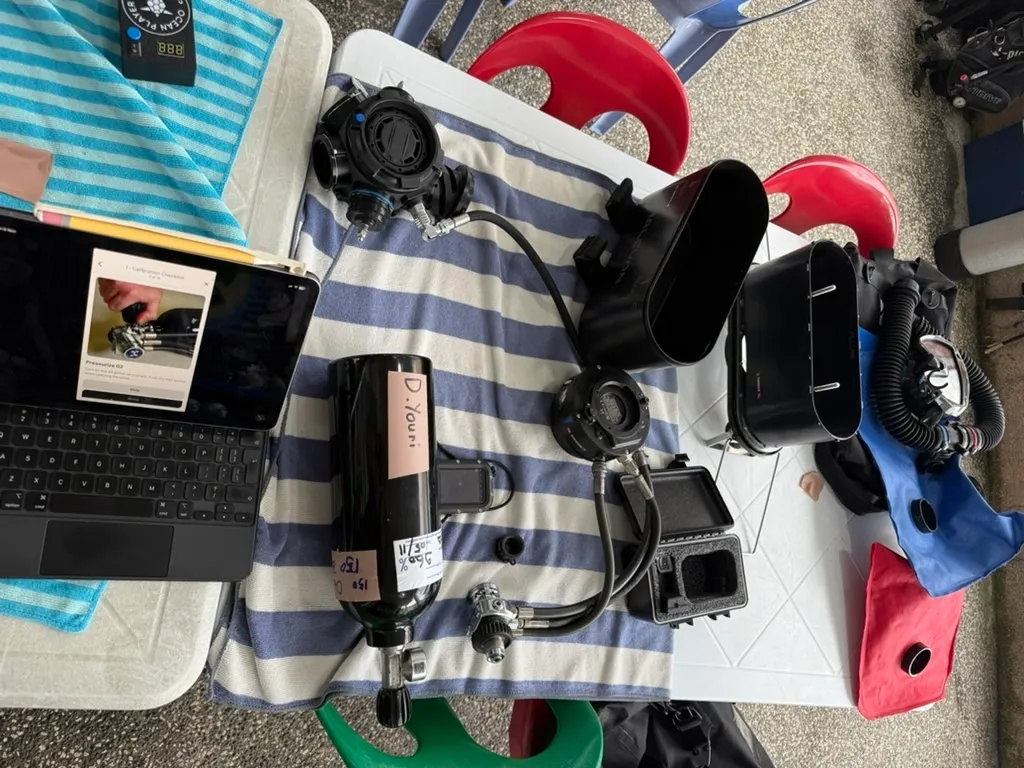
We started the course with an extensive discussion about closed-circuit rebreathers, covering their operating principles, configurations, and the different technologies involved.
We also discussed some military applications of rebreathers and explored several technical aspects of CCR diving, including loop volume.
Among the concepts introduced were:
- BOV (Bailout Valve): A valve allowing the diver to switch from the rebreather loop to open-circuit breathing gas.
- BOC (Bailout on Circuit): Internal open-circuit bailout configuration.
- ADV (Automatic Diluent Valve): Automatically adds diluent to the breathing loop when necessary.
The first day was incredibly intensive. There was so much information exchanged that, as I write this section, I genuinely feel as though we had already completed two days of training in just one.
And we hadn't even done a dive yet!
The entire day was dedicated to preparation, explanations, demonstrations, discussions, and understanding the machine. It was a great introduction to the complexity of CCR diving and the level of knowledge required before getting into the water.
Day 2: First Pool Session and First Ocean Dive
We started the second day with a classroom session, going through the official GUE course material and its slides.
One thing I particularly appreciated about Jong Moon LEE 's teaching approach was how much room he gave us to ask questions. No matter how specific the question was, he took the time to explain things properly.
Interestingly, we had already covered a significant portion of the information presented in the slides during the previous day's discussions, which made it easier to connect everything together.
After the classroom session, we headed to the swimming pool.
The objective was to become familiar with the machine, understand the PPO2 readings, and start practising the Basic 5.
The Basic 5 is a sequence of five fundamental skills that CCR divers must be able to perform confidently to manage and troubleshoot their equipment.
The first pool session was quite challenging for me.
One of the main difficulties was learning to keep my loop volume smaller. It felt unnatural, and I struggled to get comfortable with the breathing technique.
At that point, I started wondering whether I would actually enjoy CCR diving.
I had experienced a similar feeling before. During my previous training, we had spent a lot of time in the swimming pool and unfortunately never had the opportunity to properly experience the machine in the ocean because of a typhoon. Discover CCR Diving Triton JJ first experience
This time, however, we were going to get that opportunity.
First Ocean Dive on a CCR: Loop Volume at Depth
In the afternoon, we finally headed to the ocean.
It was a completely different experience.
At the beginning, I was still quite concerned about the loop volume. I was so focused on managing my breathing that I wasn't really enjoying the dive.
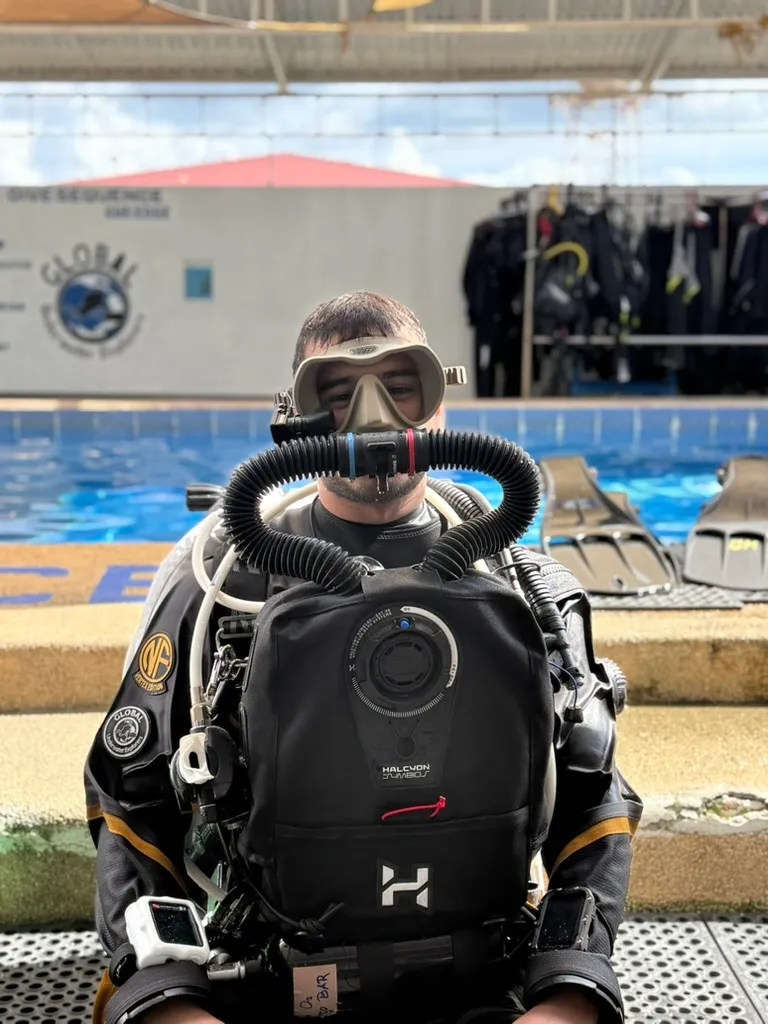
However, as we descended, something changed. The extra water pressure made it easier to keep my loop volume small, and my breathing settled into a steadier rhythm. Once I stopped fighting the machine, I could finally relax and start playing around with the rebreather instead of constantly worrying about it.
Nevertheless, it was another important learning experience.
Day 3: Basic 5 Skills and a Flooded Rebreather
By the third day, I was already feeling much better with the machine.
The initial discomfort was gradually disappearing, and I was starting to become more familiar with the breathing technique and the different skills required to manage the rebreather.
All of these exercises were carried out in a controlled environment, with an instructor supervising and a clear plan for every scenario. Mistakes during training are expected, and they're a big part of why we train this way.
How I Flooded the Rebreather (and What I Learned)
During the dive, I signalled to Jong Moon LEE that I could feel gurgling in the loop. He immediately understood that the machine might be flooded and signalled for us to return to the surface.
Looking back, I think my mistake was that I had not fully closed the DSV (the dive/surface valve on the mouthpiece, which seals the loop when closed). As a result, water was able to enter the loop and flood the machine.
Jong Moon LEE reassured me that these things can happen by mistake and that we would assess the situation once we were back at the dive centre.
When we inspected the unit, it was completely flooded. The inhalation counterlung (the flexible bag that holds the gas you breathe) was full of water. My trim had been moving up and down, allowing water to travel from the bucket into the counterlung.
The sensors were no longer working, and the board could not read their values. Jong Moon LEE put the sensors in the air-conditioned room to help remove the moisture. Hopefully, the GreenFlash cell was still reading correctly.
I felt particularly bad because the unit belonged to Zicong Wang (Shaun). It was not a rental unit; it was a friend's CCR, and both the machine and its cells were new.
Jong Moon LEE helped me clean the CCR and install other working O2 cells. I was grateful for his help, but I could not help worrying about the damage, the cost of replacing components, and, most importantly, the possibility of affecting a friendship.
It was an expensive lesson, and one I won't forget. Handling someone else's equipment carries a different kind of responsibility, and I now double-check everything, especially valves, before getting in the water. I spoke with Zicong Wang (Shaun) afterwards and he was very understanding, and we're sorting out the replacement costs together. For future training, I'd rather use rental units or my own equipment.
Day 4: Diluent Flushes and Runaway ADV Drills
As usual, we started the day with some theory before moving on to practical exercises.
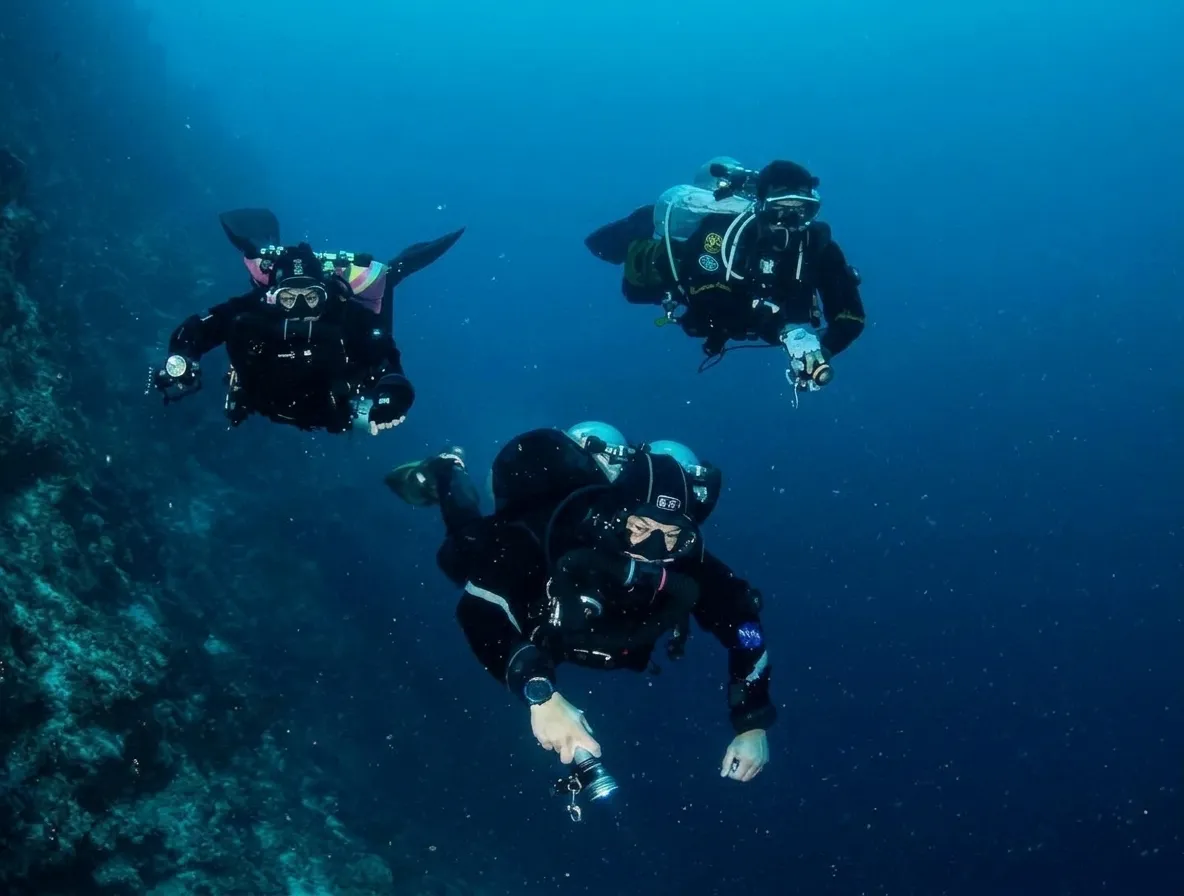
We worked on diluent flushes in both open-circuit and closed-circuit configurations, as well as runaway scenarios.
Day 5: Bailout Ascents with High PPO2, Low PPO2 and Sensor Failures
Day five was dedicated to ascent training.
The objective was to test our buoyancy control while managing simulated CCR failures.
The initial plan was to descend to 24 metres, establish our position, and then deal with a simulated problem before executing a bailout.
Each diver had to manage a different scenario:
- High PPO2.
- Low PPO2.
- Sensor discrepancy.
The exercise was designed to put us in situations where we had to manage the problem, maintain control of our buoyancy, and execute the appropriate response.
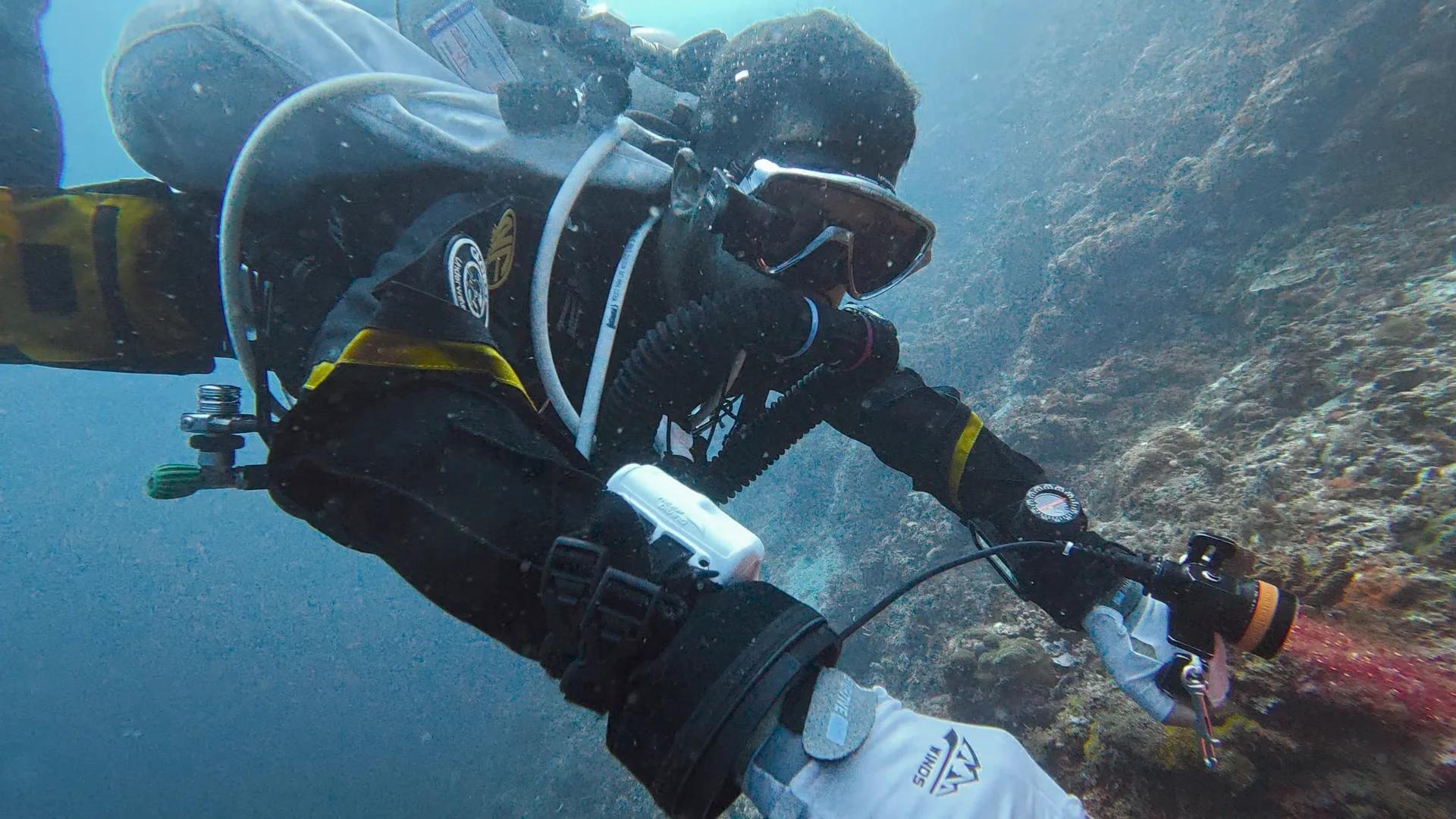
My scenario was ** high PPO2 / low PPO2 / sensor discrepancy **. Once we reached 24 metres and we started confortably diving and exploring and admiring the wall, Jong Moon LEE ask us to settled into position, triggered the problem. My first instinct was to calm down and think, then signal to my teammates the problem, and temporary bail out depth.
The hardest part wasn't the bailout itself. It was doing it while holding my buoyancy and not drifting up or down. A trick that i received is to take my time, so once I bailed out, I can slowly think about a solution like dilluant flush or using MAV based on the situation, or full bailout.
Seeing how quickly a calm situation becomes busy made me appreciate why we drill these skills until they're automatic.
It was a good opportunity to put together several of the skills we had been practising throughout the course.
Day 6: Diving Marigondon Cave on a Rebreather
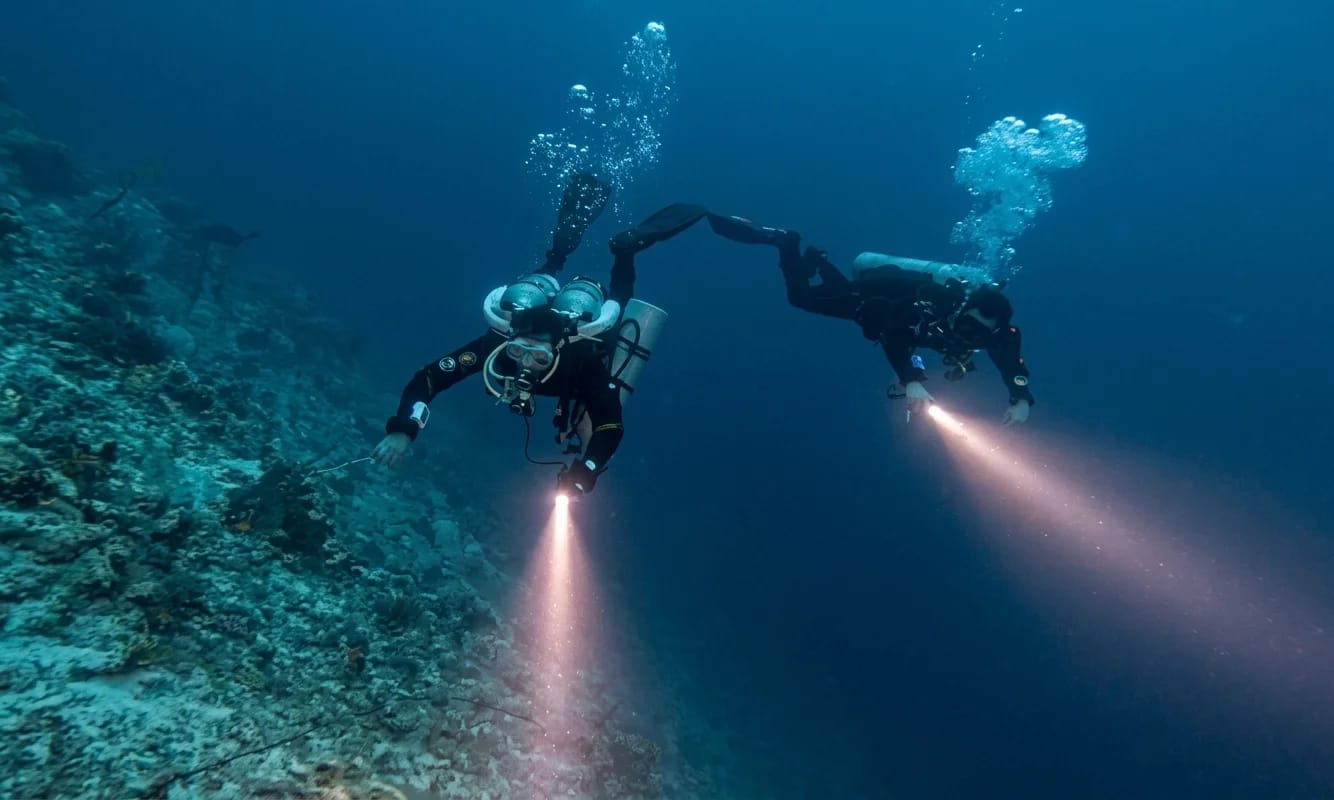
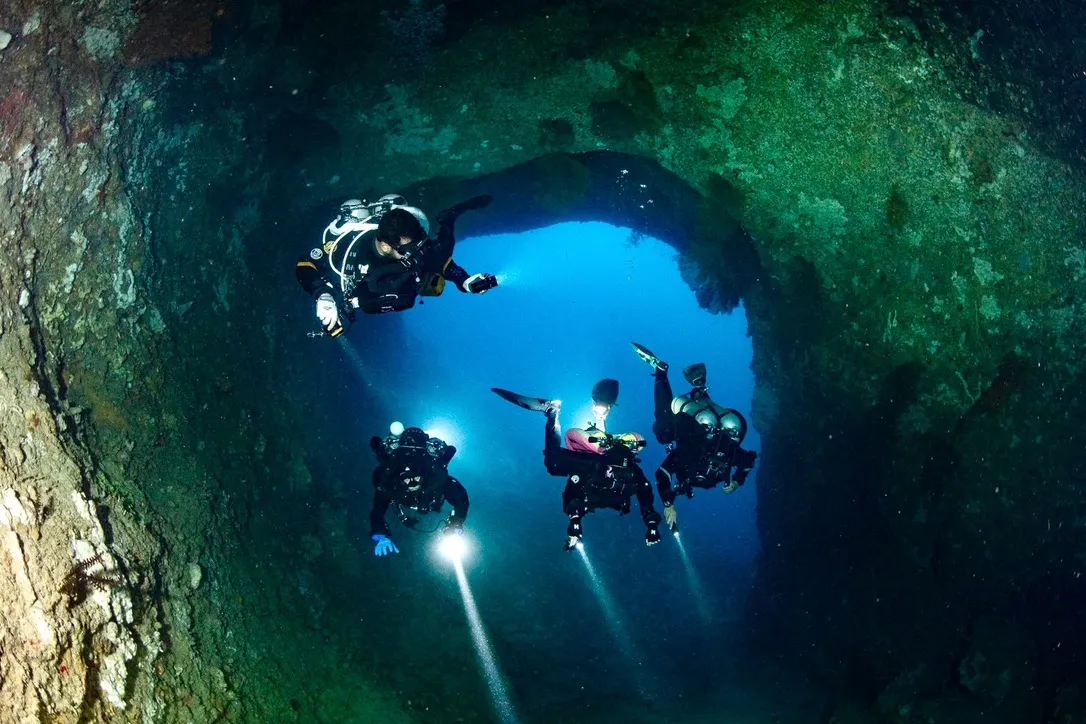
For our sixth day, we went to Marigondon Cave.
We stayed within the cavern section, where we had the opportunity to explore the environment and take some photographs.
Here is one of the photographs from the dive.
During this day, Yihao Yang also joined us. He was diving a JJ-CCR, which gave us another opportunity to see a different rebreather configuration in action.
The first ascent went well. On the second, I wasn't happy with my performance. As Jong Moon LEE put it, "you need to be honest with yourself."
Looking back, I think I was so busy monitoring everything that I let my spool drop. Luckily, I had a good buddy in Yihao Yang, who collected it for me. I calmed myself down and slowly managed to complete the ascent properly, but it wasn't as clean as I wanted.
I need to train on staying calm while busy and overloaded with tasks. It's one of my biggest weak points in diving.
We're still new CCR divers, and ascents while task-loaded are likely to be part of our normal working environment on future projects. That's why it's worth getting them right now.
Rebreather Maintenance Session
After the diving sessions, we had an additional land-based session dedicated to machine maintenance.
Understanding how to maintain the rebreather is just as important as knowing how to dive it. We went through the different maintenance procedures and discussed the care required to keep the equipment in good condition.
To finish the day, we all went out for hotpot together.
It was a really nice evening, with plenty of conversations and time to relax after several intensive days of training. We eventually finished the evening by going out for ice cream.
A great way to end another busy day of CCR training.
Fun Diving in Cebu After the Course
During my last day in Cebu, we all went diving at Mactan Island, a the closest dive site near the dive center.
That day, Melbin and wayjey arrived and wanted to dive straight away. After landing at the airport, they unpacked their JJ-CCR units and got everything ready in no time. You could clearly see how many dives they had clocked on their JJs from the way they prepared their equipment so efficiently.
After introducing ourselves, we all headed out on the main boat operated by Ocean Player.
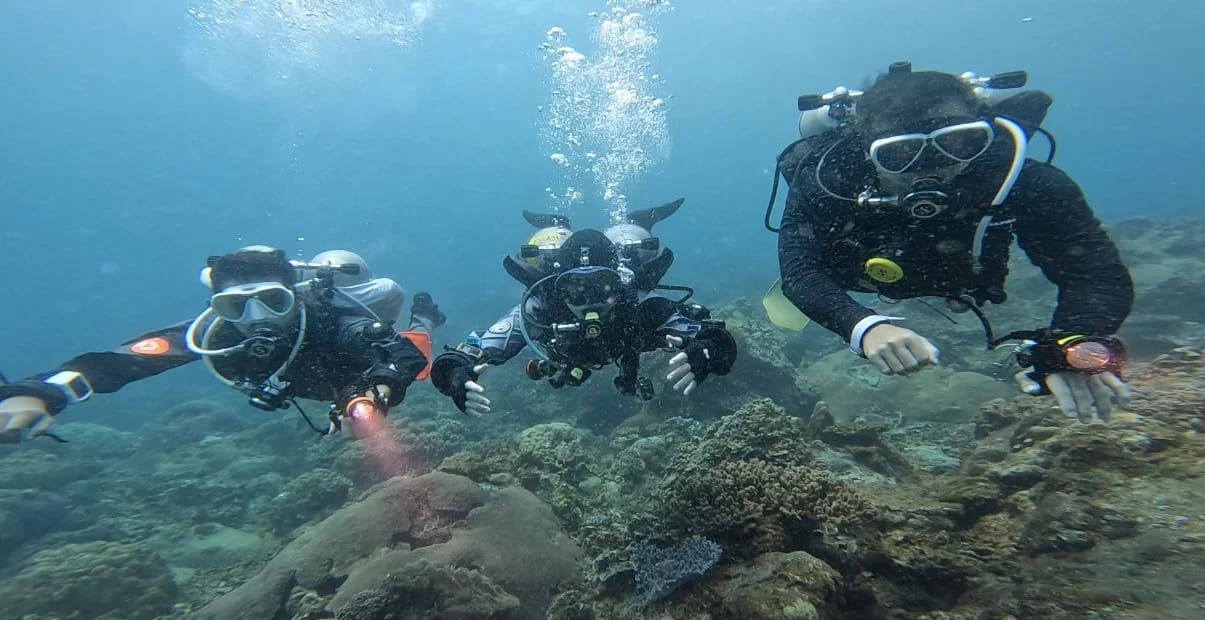
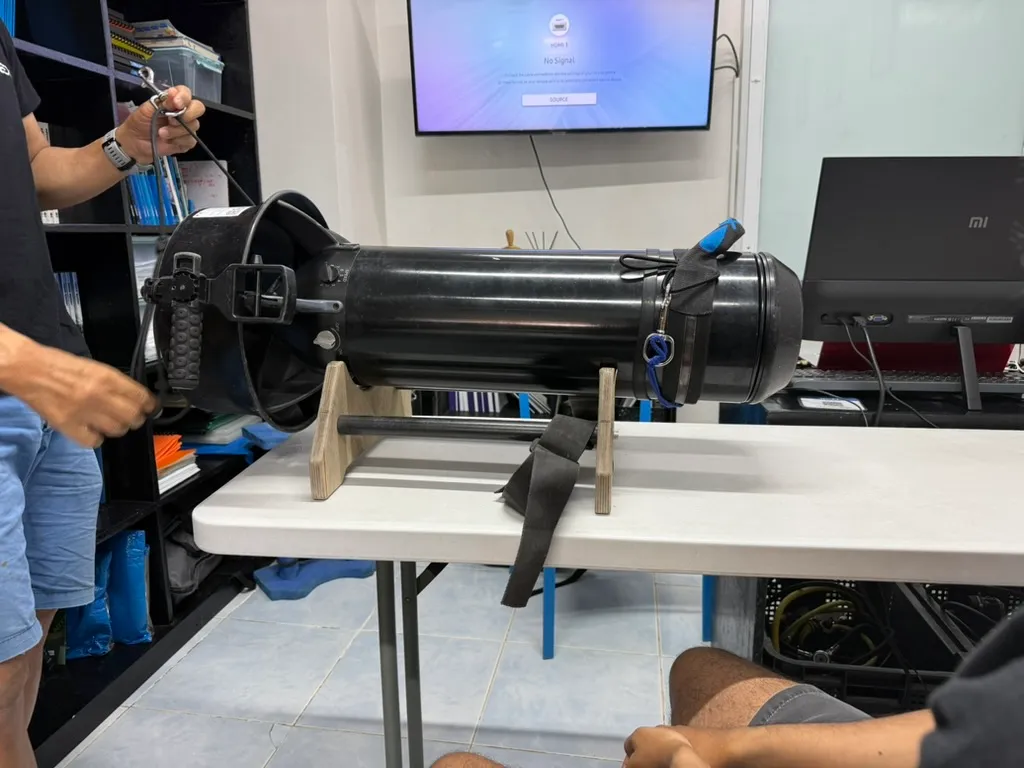
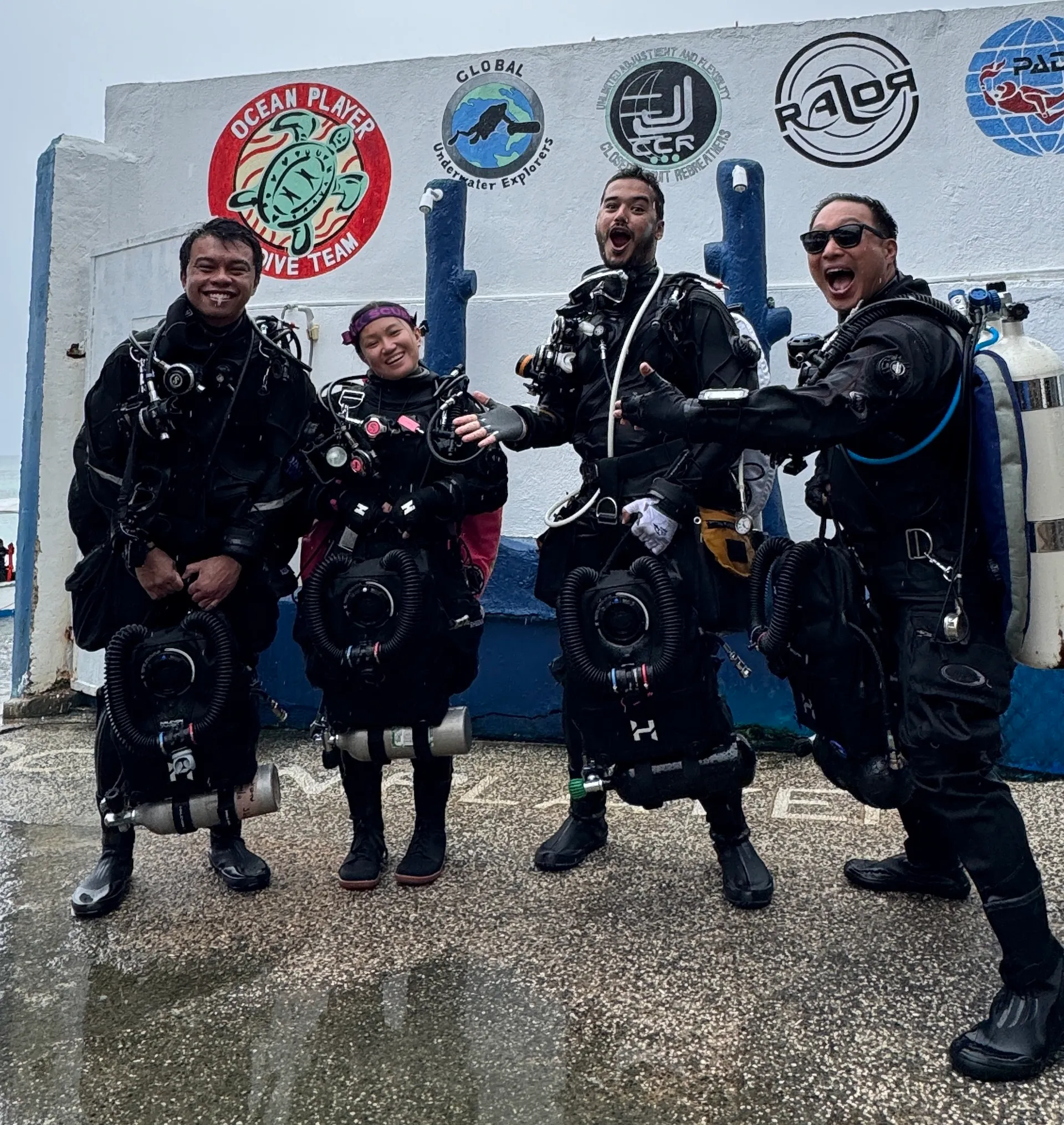
It was my first time visiting the island, and it was great to finally explore and dive there. We had a big GUE team: two DPVs, three Symbios units, and three JJ-CCR units.
The plan was simple: enjoy the dives!
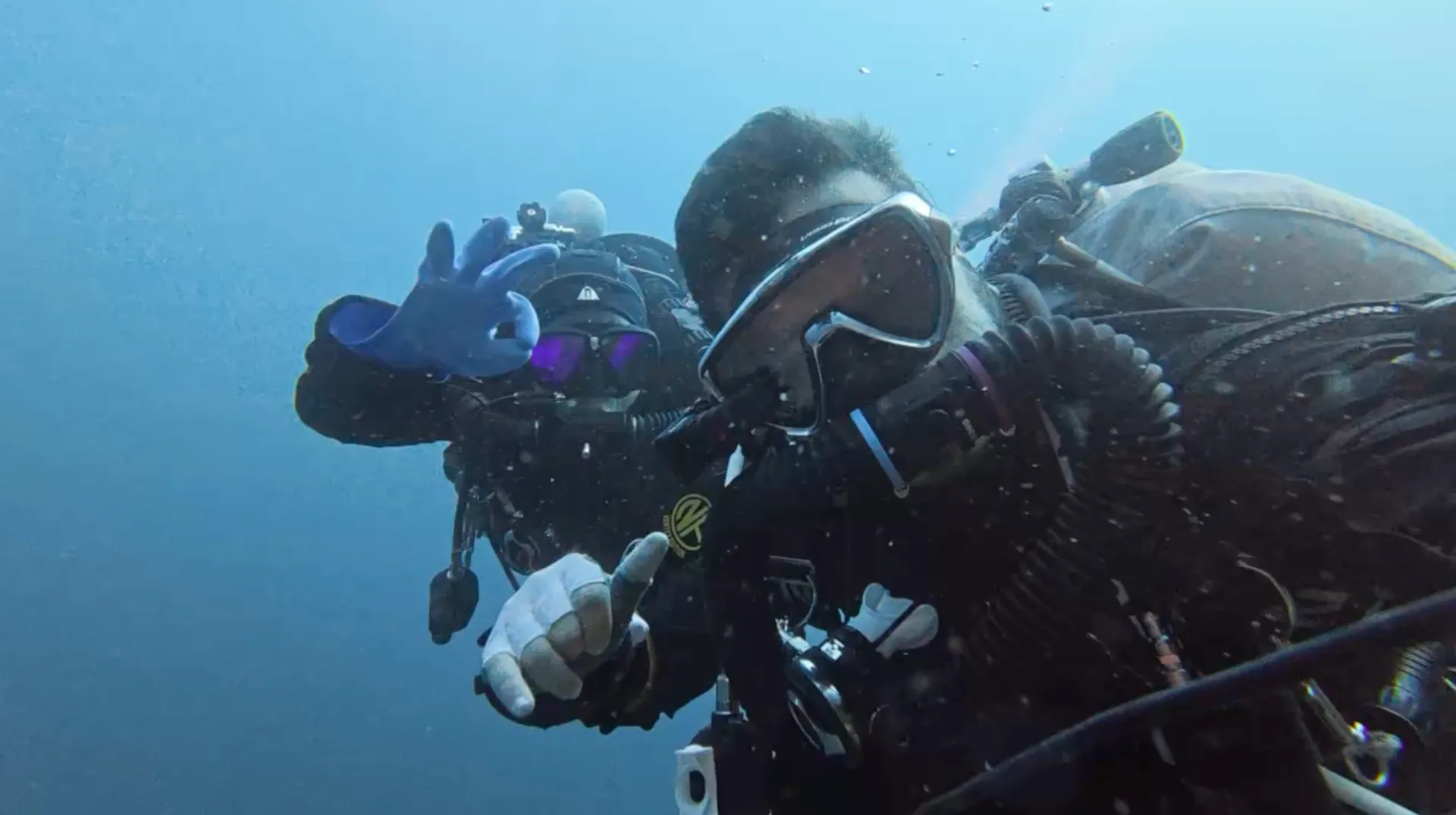
It was particularly nice to dive with Yihao Yang, who is a much more experienced diver than I am. There is always a lot to learn from diving with people who have more experience. It helps you build knowledge, observe different approaches, and understand where you can improve.
Jong Moon LEE also reminded us that we need to keep training and practising. Without regular practice, we will inevitably lose some of the skills required to operate the machine confidently. Consistent training, continuous progress, and working on our skills are essential if we want to become better and safer CCR divers.
What's Next After CCR Fundamentals
I am happy that I managed to achieve the goals I had set for myself this year.
2026 has been a challenging but rewarding year: Tech Pass, Tech 1 course, and now CCR Fundamentals. Each experience has brought new challenges, new lessons, and opportunities to improve as a diver.
I am looking forward to seeing what comes next. I am already thinking about my goals for 2027, which will probably be filled with projects and dives.
But I will let you know more about that soon, in the next article.
CCR Terms Explained: ADV, BOV, DSV, PPO2 and More
- ADV (Automatic Diluent Valve): Automatically adds diluent to the breathing loop when necessary.
- BOC (Bailout on Circuit): Internal open-circuit bailout configuration.
- BOV (Bailout Valve): A valve allowing the diver to switch from the rebreather loop to open-circuit breathing gas.
- Bucket: The canister that holds the CO₂ scrubber material.
- Counterlung: The flexible bags that hold the gas you breathe.
- DSV (Dive/Surface Valve): The mouthpiece valve that seals the loop when closed.
- Loop volume: The amount of gas held in the breathing loop at a given time.
- PPO2: The partial pressure of oxygen in the loop, which the machine monitors constantly.
- Sorb: The scrubber material that removes CO₂ from the loop.
Keep reading