Road to the depths of Brunei : Part 2 Young Diver Program
My experience with the GUE Young Diver Program was a week built around connection, exploration, and growth — above and below the surface. Beyond diving itself, the program brought together leadership and mentorship works...
Field transcript
Dive notes and observations
The GUE Young Diver Program 2026: A Journey of Growth, Resilience, and Self-Discovery
Introduction: Finding My Way to Sardinia
I'd like to start this blog with a special thank you to Jennifer Thomson for all the logistics and communication, and to jp bresser and Dorota Czerny for organizing the GUE Young Diver Program 2026. I feel incredibly fortunate to have been part of the small group selected for this year's cohort.
Last summer, while scrolling through social media, I noticed several GUE divers I follow gathering in Sardinia for something called the GUE Young Diver Program. At the time, I had already applied for the NextGen Program, a GUE initiative I'd been actively supporting and speaking about throughout 2025 to show my motivation and commitment. I wasn't selected that year — other divers were chosen instead.
When I discovered the Young Diver Program, I immediately recognized what an incredible opportunity it was: a chance to connect with divers from around the world and be part of an experience built specifically for developing underwater educators and passionate divers. I knew right away that I wanted to be part of the following year's selection. Many amazing instructors were involved that year, including gemma, my mentor and the instructor I'd hoped to have for my Fundamentals course, along with jp bresser, Dorota Czerny, and several others I hadn't yet met. Over the following months, as I waited for the results, I held onto the hope that this would be my year.
The Arrival: A Test of Determination
Getting to Sardinia from Kuala Lumpur was no easy task. The first challenge came before I'd even left — navigating a different terminal in Rome to catch my connecting flight to Cagliari. The second was reaching Cala Gonone, home to baseline dive center. Between late trains and buses, I found myself stuck in Nuoro, watching the hours slip away.
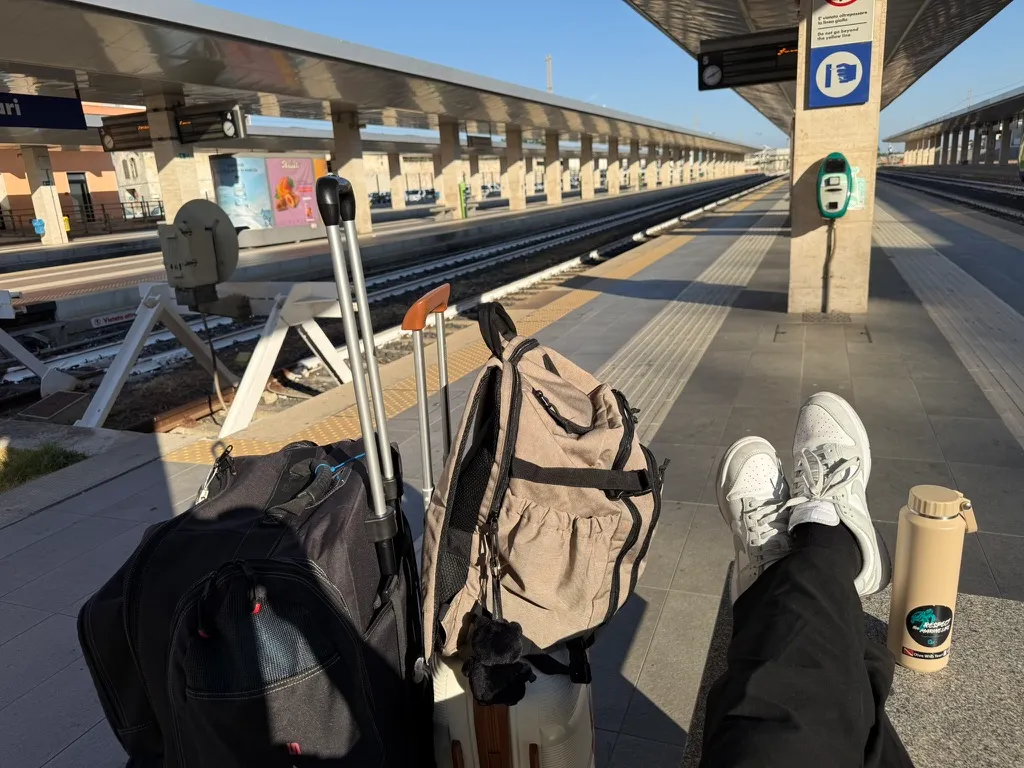
Desperate for some rest before the program started, I'd even considered sleeping at the airport overnight. But I pushed through, and made it to the villa at 6 PM — late, but not too late — with just enough time to settle in before the week truly began.
Once there, I started meeting the other participants. The first people I met were Koen van der Lee from the Netherlands and Eason Jiang from China. We got talking right away — where we came from, what drew us to diving, and the shared ordeal of reaching this small village on the Sardinian coast. There was an immediate sense of camaraderie: we were all outsiders arriving at the same moment, bonded by the effort it took to get there.
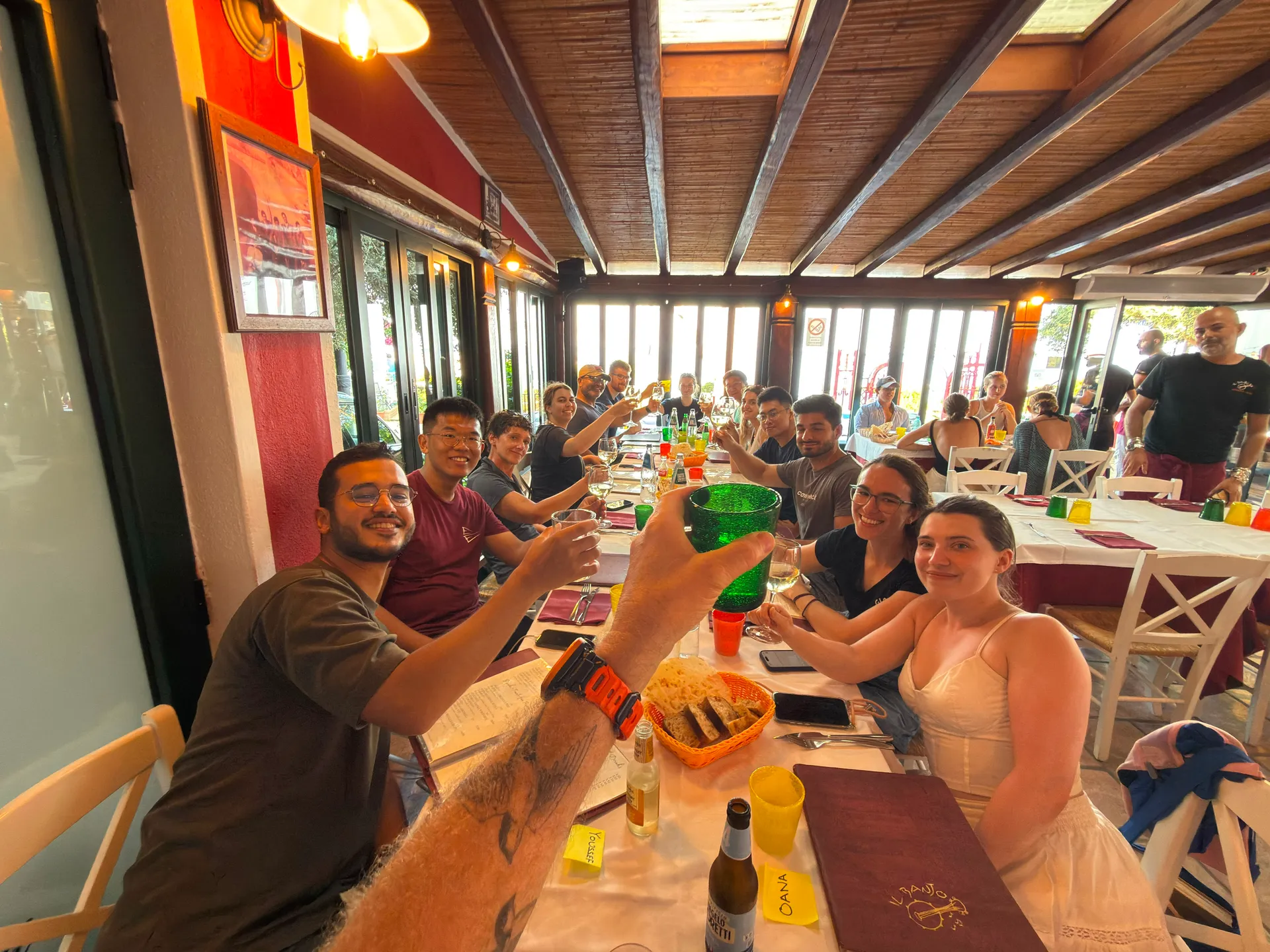
Throughout the evening, more of the team arrived: Bijan Faghfouri and Oana Beatrice, then Alicja Ulejczyk and Linda Jarkovska. Since none of us had met before, we decided to go out for dinner together — an easy way to start bonding. We chose pizza, the obvious choice in Italy, and shared wine and conversation as we got to know one another. After a warm evening, we returned to the villa, tired but excited for what lay ahead.
Later that night, Hank Wu, Harry Wu, and Veronika Paulovicova arrived, completing our group.
Day 1: Setting the Foundation — Vision, Framework, and Purpose
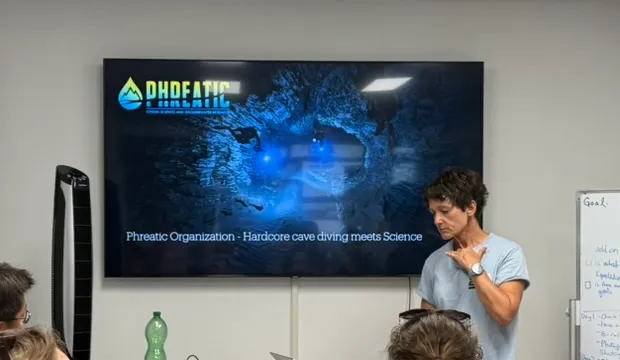
The program opened with presentations that would set the tone for the entire week. Dorota Czerny welcomed us with a message that would resonate throughout the five days: "The future is in your hands. It's up to you to decide what to do next. We can guide you, we can help you, but we can't show you what to do." Those words immediately shifted the energy in the room. This wasn't going to be a program where we passively received information — we were being invited to be active architects of our own learning and growth.
We began by laying out our expectations for the week: some of us said meeting new people, others said working on a project, and so on. Everything was written on the board to identify what mattered most to each of us.
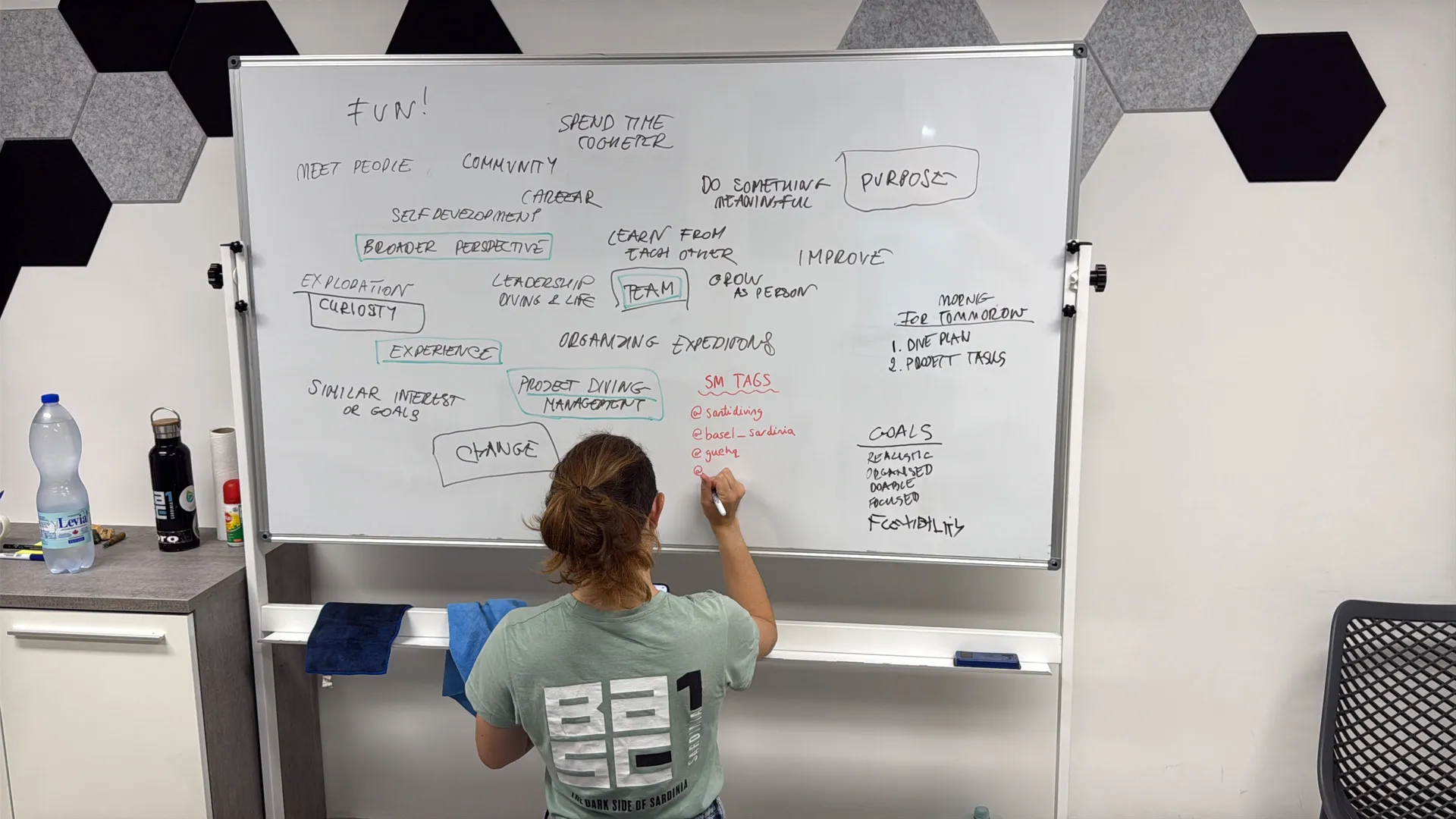
jp bresser then presented the curriculum and framework for the week, walking us through the program's structure and the foundational concepts we'd be exploring: leadership, character development, resilience, and intentional action. More importantly, we were split into specialized working groups based on our interests and skills:
- Data Management and Legacy Content Video — led by Eason Jiang, Alicja Ulejczyk, Veronika Paulovicova, and me. The goal: create a piece of legacy content — a short film, photo essay, or story that captures something true about the week. This meant photogrammetry, a detailed map, and a documentation video of the process, aimed at a new "undiscovered" site, plus interviews for the YDP shown at the final celebration dinner on Friday.
- Character Development Exercises — led by Linda Jarkovska, Hank Wu, and Bijan Faghfouri. The goal: build a character-building activity for next year's cohort — one experiential exercise that teaches a strength (grit, curiosity, trust, or whatever they choose) to next year's young divers. Over time, this becomes a peer-built, evolving curriculum, with each cohort leaving something behind for the next. YDP staff will decide which activity to use.
- Tradition-Building Project — led by Koen van der Lee and Harry Wu. The goal: invent a ritual or tradition that future cohorts inherit — a pre-dive moment, a reflection moment, a closing ceremony, a symbol, a phrase.
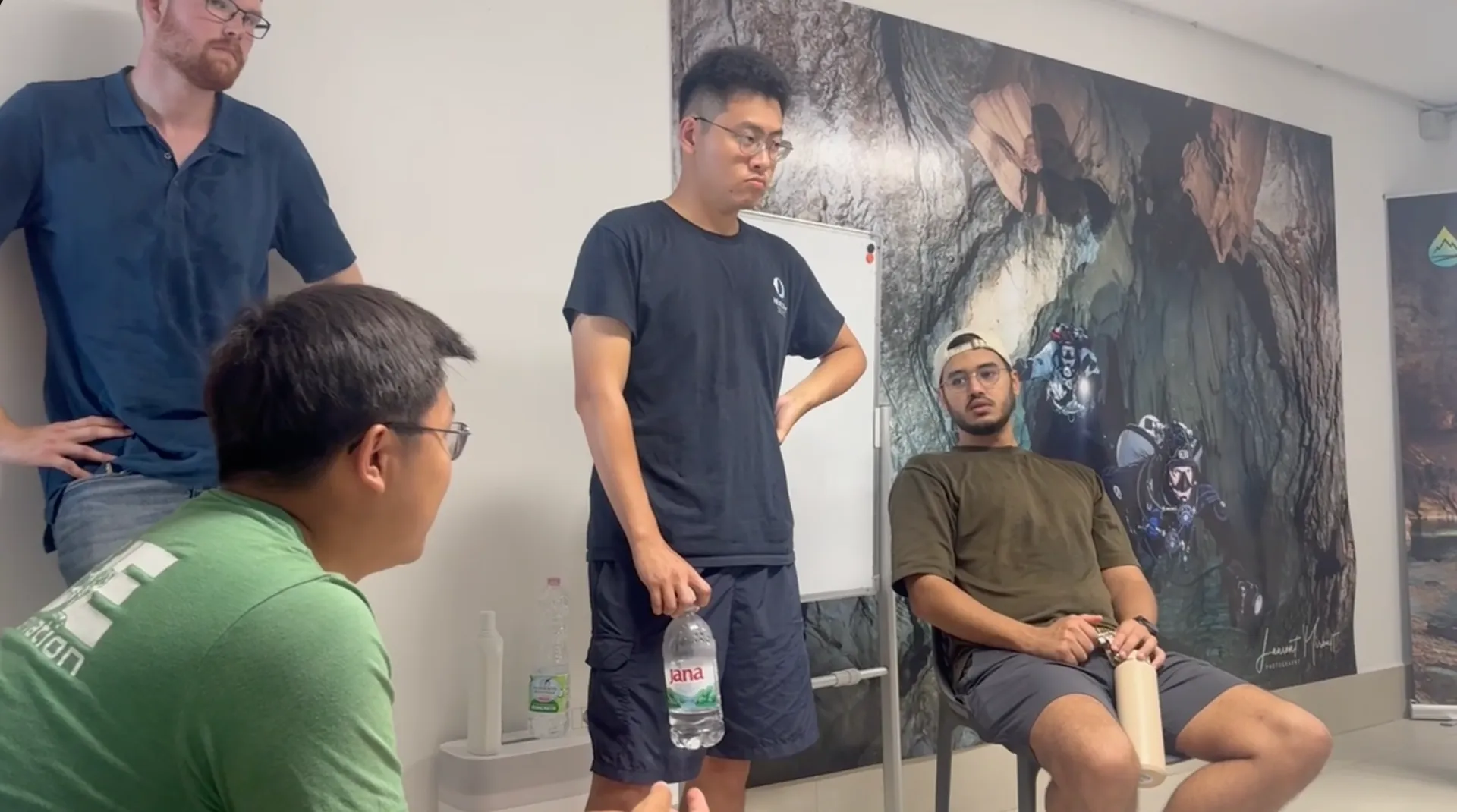
During the lunch break, we had to present our goal project for Objective 1. We were free to choose from several options, and based on our backgrounds, Alicja Ulejczyk, Eason Jiang, and I decided on photogrammetry.
The goal was simple: document the KT-12, a German wreck torpedoed by a British submarine. We'd split into teams — some handling photogrammetry, others handling B-roll documentation — with a 3D model of the wreck and a documentary of the experience as our deliverables.
Once we'd agreed on the approach, we presented the plan to the organizers.
By Friday, our goal was to complete a top-view photogrammetry scan of the wreck, shoot B-roll, and produce a video about either the wreck or the program.
- 1st dive: Scout the wreck; decide, based on that first dive, whether to keep the same objective.
- 2nd dive: Top scanning + B-roll.
- 3rd dive: Based on the results, fix the scan and cover any remaining gaps.
The response we got: "Your plan is ambitious — not too ambitious, but ambitious."
That comment left many of us second-guessing what we'd agreed on. Had we set a bigger goal than we could actually achieve? After some discussion that night, we agreed to scout first and decide from there whether to keep the goal or scale it back.
ABC of Video Making
The second half of Day 1 focused on video documentation, a skill essential for modern diving professionals and educators. jp bresser introduced us to the ABC structure: Attention, Body, and Conclusion.
Attention (10%): Hook the viewer with a compelling title, establish the location with drone shots and maps, and clearly state your objective.
Body (Main content): Tell your story through narration, diver interviews, B-roll footage, and graphics. This is where you capture the essence of the experience — the diving itself, the underwater environment, and the divers' expertise and personality.
Conclusion: Deliver on the promise made in your introduction, then close with credits, a call to action, and a sense of completion.
GUE Project Guidelines
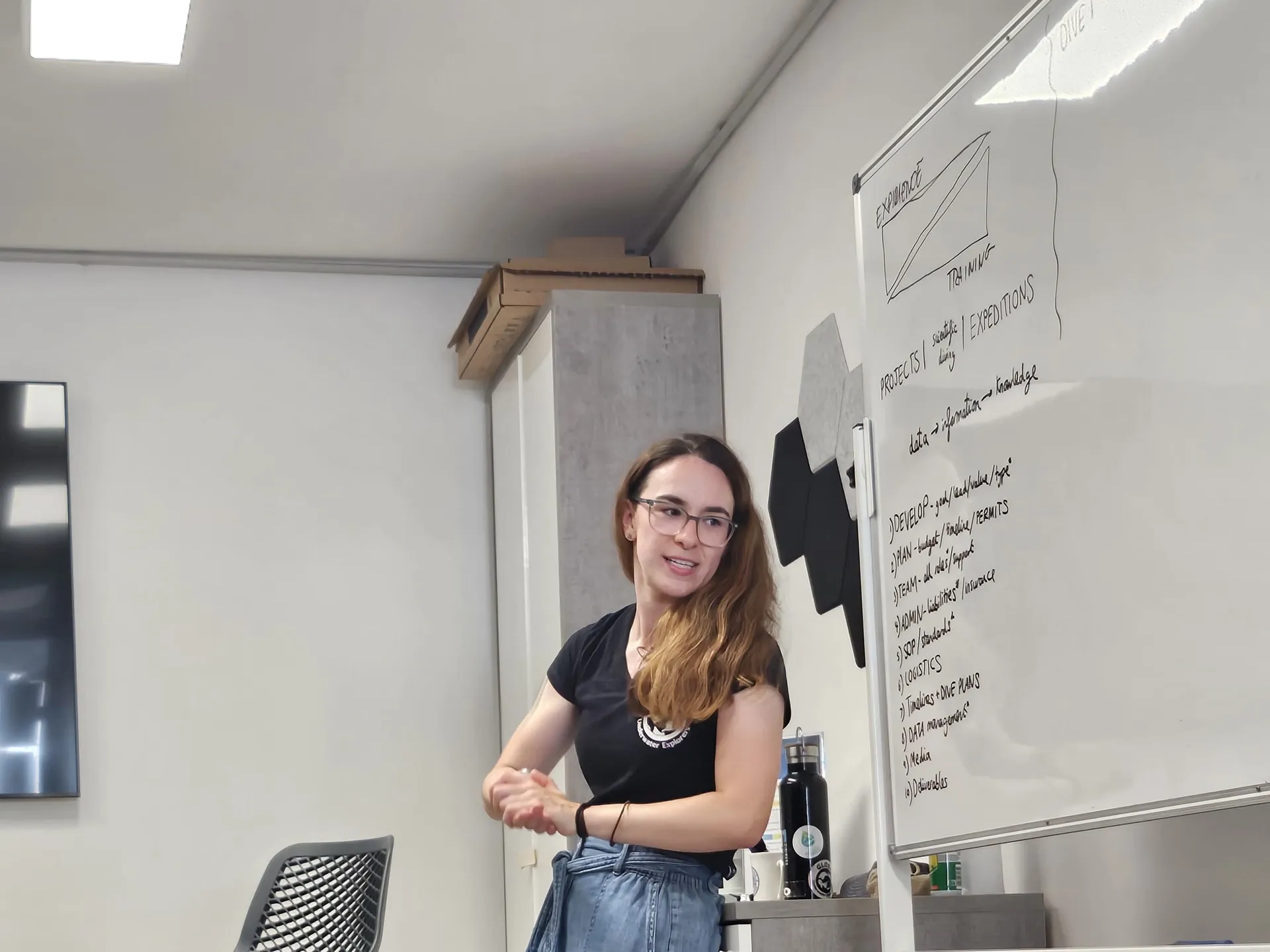
Jennifer Thomson presented the 10-point project framework that would guide our work for the rest of the week:
- Develop | 2. Plan | 3. Team | 4. Admin (Liabilities & Insurance) | 5. Standard Operating Procedures | 6. Logistics | 7. Timelines | 8. Data Management | 9. Media | 10. Deliverables
Key Learning: On the very first day, I realized that success in diving — and in life — isn't about isolated brilliance. It's about having a clear framework, a purposeful team, and the courage to take ownership of your own growth. The instructors weren't there to tell us what to do; they were there to show us how to think intentionally about our goals and execute with precision.
We ended the day preparing equipment for tomorrow's dive and having dinner together as a group.
Day 2: The First Dive and the Strength of Character
We woke early for our first dive. Conditions in the Mediterranean were beautiful. It was my first time diving steel double tanks, and I was a little worried my weighting wasn't right. I was teamed up with Hank Wu and Bijan Faghfouri.
The goal was to scout the wreck and decide how we'd approach the scanning, and whether to stick with the project we'd defined.
Dive 1: Scouting the KT-12
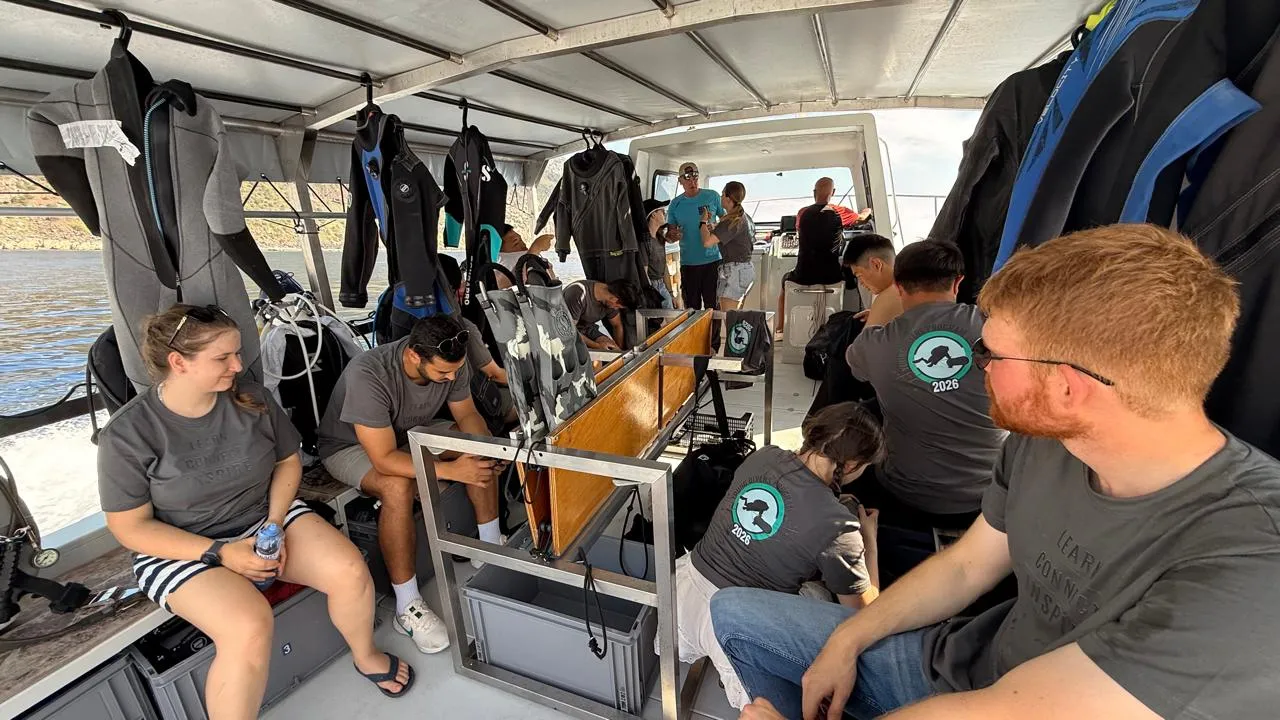
jp bresser led the jump into the water and the descent along the rope. As we went down, I felt the familiar rush of weightlessness, and grew calmer with every meter.
After exploring the wreck and settling into the water, I felt confident the photogrammetry project we'd planned was feasible. When we came across the cannon, I decided we could run a quick photogrammetry test: I signaled my buddy Hank Wu and handed him my camera to scan it. He understood immediately and began scanning, while Bijan Faghfouri filmed B-roll.
The afternoon was dedicated to a discussion about character — a concept that would become central to the entire program. What makes a good diver? A good leader? A good person?
Through guided conversation, we identified three pillars of character:
Strength of Heart: Empathy, compassion, and the ability to connect with others — the capacity to listen deeply, understand what others are experiencing, and respond with kindness.
Strength of Will: The ability to persist, make decisions aligned with your values, and follow through even when things get difficult.
Strength of Mind: Creativity, critical thinking, and a growth mindset — the belief that you can evolve and improve rather than being fixed in your limitations.
We then explored growth mindset versus fixed mindset. A growth mindset is the belief that you can change, improve, and develop skills through effort. A fixed mindset is the belief that your abilities are static: "I'm bad at math," "I'm not a natural leader," "I can't do that."
As an exercise, we each shared a moment when we thought something was impossible — but did it anyway. Alicja Ulejczyk shared her marathon story: she'd trained to run 50 kilometers, pushing her mind and body to their limits. When she questioned whether she could continue, it was her strength of will, and the support of her community, that kept her going.
As we shared our stories, I felt the group's transformation happening in real time. We were no longer strangers from different countries; we were a community that understood each other's fears and aspirations. Vulnerability, it turned out, was the glue that held us together.
Key Learning: I realized that character isn't something you're born with — it's something you build, moment by moment. And the foundation of strong character isn't perfection; it's the willingness to be vulnerable and to grow from failure. Failure, as it turns out, isn't something to hide from. It's a gift, if you're willing to learn from it.
The Phreatic and Apprentice Project
Jennifer Thomson also introduced us to the Apprentice Project — a series of collaborative underwater documentation initiatives showcasing GUE's commitment to scientific collaboration and environmental stewardship:
- Project 1: Sa Gologne Spring — documenting and surveying Sardinia's most sacred water source through photogrammetry
- Project 2: Cala Luna Cave — exploring a cathedral-like underwater cave formation
- Project 3: Grotta del Fico — a long-term documentation initiative spanning multiple dives over several years
- Project 4: Sacelo Locality — a collaborative project with local partners
These projects were a reminder that our work as divers extends beyond personal achievement — we're stewards of underwater environments and partners in scientific discovery.
Private Debrief
Back at the villa, we gathered for feedback and debrief. Each team shared their experiences, their successes, and the strengths we'd already shown during the dive. As we talked, something unexpected happened — we began to see each other's vulnerabilities. Dorota Czerny pointed out that everyone had felt some stress during the dive, and that this was completely normal. By naming it, she made space for us to acknowledge that growth requires stepping into discomfort.
Back at the villa, we also reviewed the team's scanning results from the dive — a success. We agreed to keep the same objective and planned the remaining dives: who was responsible for what, and which cameras we'd use.
Here's the plan:
- 30 minutes at 30m — deco plan: ascend from 30m to 15m, then 12m, 9m, 6m, 3m
- Team 1: scan the first half of the wreck
- Team 2: scan the second half of the wreck
- Team 3: shoot B-roll
- Team 4: scan the cannon in detail
Day 3: Resilience, Failure, and the Power of Intentional Goals
On Day 3, Dorota Czerny posed a profound question: "What if scuba diving stopped being something you could do? What would you do then?" She was asking us to imagine losing the thing that makes us happiest, and to consider what else brings meaning to our lives.
This led to a key insight: don't rely on a single goal or path for your sense of purpose. Instead, set five independent goals that don't depend on each other. That way, if one fails completely, you still have four other avenues to pursue — removing the catastrophic "all or nothing" thinking that so often creeps in.
We presented our plan to everyone, and once again, the response was that it was ambitious.
Dive 2: The Beginning of the Work
We were all focused on what we needed to achieve. Teams 1 and 2 were ready to start the dive. As on the first dive, jp bresser led the entry and we followed. We got straight to scanning; this time Hank Wu and Harry Wu held the cameras. Since my team had 3 divers and the other had 2, I made sure to track where Team 2 started their scan so the two would overlap — otherwise we'd end up with disconnected sections. The scan took 17 minutes; afterward, we explored the wreck and visited different sections.
jp bresser also lent us his 30,000-lumen light. My team attempted a small additional scan: I held the light while Koen van der Lee did the scanning. During the dive, I felt we'd succeeded, but I wanted to wait for the results before celebrating.
Afterward, we spent late morning in a debrief, comparing our intentions before the previous day's dive with the actual outcomes. This simple exercise — comparing intention to reality — revealed something interesting. Most of us had identified Strength of Will as our strongest attribute, but Dorota Czerny gently pointed out that we often neglect Strength of Heart. She also noted something I hadn't considered: we'd spent far more time bonding as a team outside the water than inside it. Relationships, she suggested, are sometimes more important than the skill we're practicing.
Later that day, we filmed testimonial videos with Hank Wu, imagining we were speaking to a prospective GUE diver who was hesitant about the transition. The prompt was powerful: "What challenge did you face when you became a GUE diver, and how did you overcome it?" jp bresser took these raw interviews and began editing them, capturing our voices and our stories.
Testimonial Time
Then we heard from Michael Daniels, a 36-year-old retired professional who'd left conventional life behind to become a nomadic technical diver. His story was a masterclass in intentional decision-making. He described a series of deliberate choices: leaving home at 17, studying engineering, joining a military search-and-rescue team where he learned discipline and teamwork, and eventually transitioning into diving.
One story stuck with me. During his military training, his team had broken a rule set by another unit's leadership. When confronted, his team leader could have thrown them under the bus — instead, the team stuck together and accepted the consequences as one. That moment, choosing loyalty and integrity over self-protection, shaped Michael Daniels's understanding of what it means to be part of a team.
Key Learning: Resilience isn't about never falling down. It's about the decision you make in the moment of failure. Do you blame others? Do you blame yourself? Or do you ask what you can learn? Michael Daniels's story showed me that true strength comes from choosing your team, committing to shared values, and standing by your people even when it's uncomfortable.
Results of the Photogrammetry
Back at the villa, we started processing the scans. Two computers were allocated to the task — Eason Jiang's and mine — each handling one team's data to split the workload and computing power. Earlier, I'd thought of bringing ice cream for everyone, a small way to share the moment and bond as a team. As on every night, we held a private debrief on what went well and what didn't — a good bonding moment in itself. Partway through, the results came in: we'd completed at least one half of the wreck.
A few minutes later, Eason Jiang shared his results — also a success. We celebrated together for the first time, though we still needed to merge the two halves.
We decided Eason Jiang would send me his results so I could try to merge the two parts — something I'd never done before. I gave it my best shot, found a merging feature in the software, and still ended up with a failure. I woke up early the next morning, around 6 AM, and tried again — this time starting the whole process from scratch with both teams' scans.
I was disappointed, given everything we'd managed to accomplish, but that last step just wasn't working. Still, I held onto hope and kept going.
Dive 3: Planning
Since the results so far had been a success, we thought it would be incredible to complete a full 3D model of the wreck — not just the top view. The catch: we only had 2 cameras, so we planned a two-by-two team coordination. Teams 1 and 2 would scan the sides while Teams 3 and 4 waited for their signal, then swapped cameras. Depending on how Teams 1 and 2 progressed, Teams 3 and 4 would either continue the scanning or, if things had gone well, move on to the remaining parts — the anchor chain connection and the propeller.
Day 4: Diving Through Adversity
Getting ready and heading to the dive center, I was still a little disappointed about the previous night's result, but I held onto hope. I brought my laptop along and let it keep processing the photogrammetry. On the way to the dive center, the process finished — success. We shared the news with everyone, trying to keep it quiet for now, since our goal had already grown well beyond what we'd originally set out to do.
Day 4's dive was different. Conditions had changed — the weather turned, and we watched a thunderstorm building on the horizon. The first team, made up of more experienced divers, completed their dive without issue. But by the time the second group entered the water, the environment had shifted noticeably.
This wasn't a failure — it was a learning opportunity. The second group faced real challenges and learned how to adapt, communicate under pressure, and trust their training when things don't go as planned. Afterward, we gathered for a debrief focused on intention-setting and outcome analysis: Did your actions match your intentions? What surprised you? What would you do differently?
One theme kept coming up throughout the day: the importance of clear communication and confirmation. As one diver put it, "Say something, then ask what the other person understood that you said." In diving, as in life, miscommunication can be dangerous — taking that extra moment to confirm understanding protects both the mission and the team.
Photogrammetry Workshop
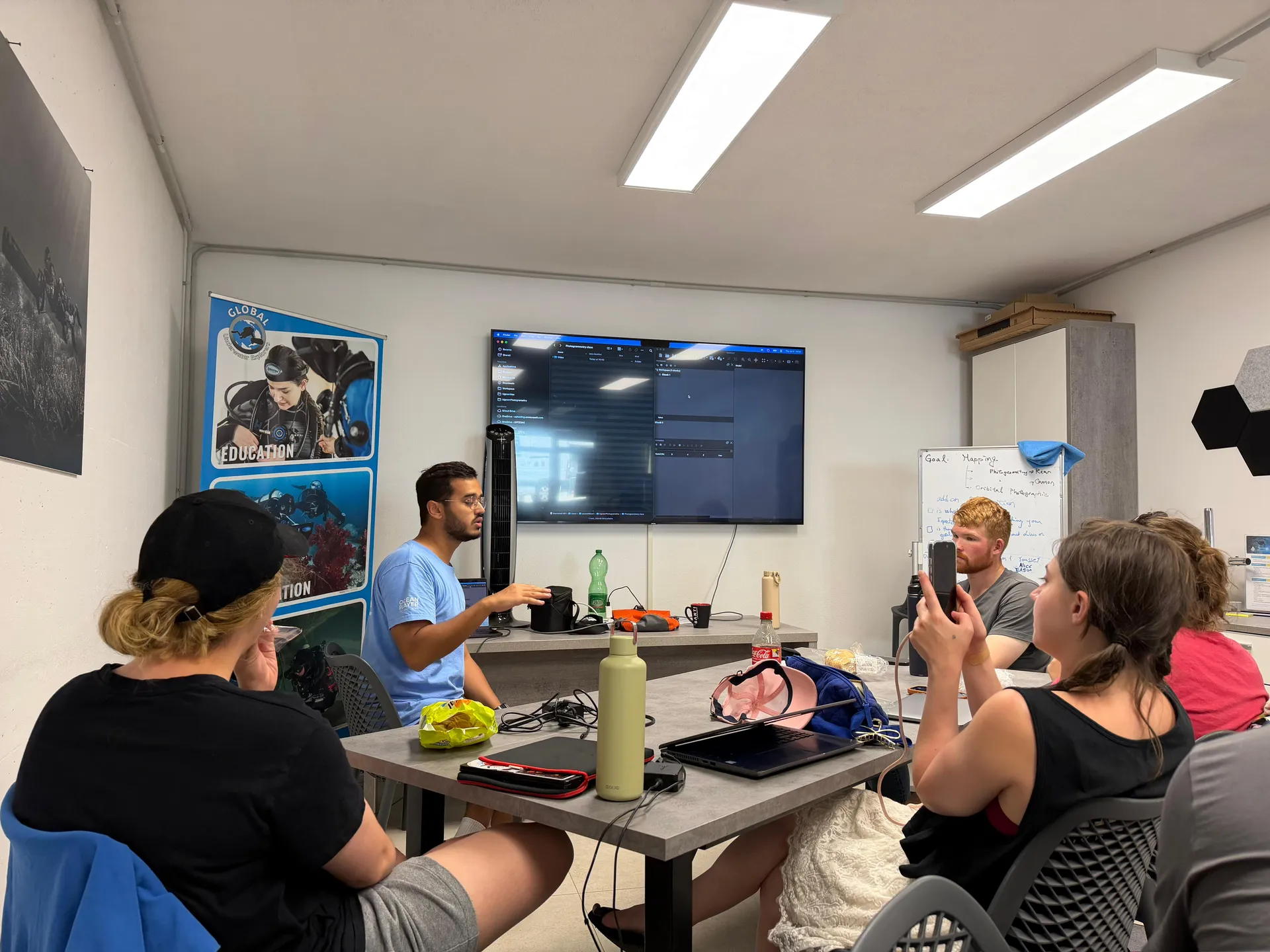
That afternoon, we held a photogrammetry workshop, walking everyone through the steps I'd been using on my laptop to generate a 3D model from photos and video — giving the whole group a foundation in photogrammetry they could apply on land as well.
Key Learning: Perfect conditions are rare. Excellence isn't shown when everything is ideal — it's shown when you execute your plan with precision even when circumstances are challenging. That's when you truly understand your training.
Afterward, we split into teams: some went for groceries, others cleaned, and the rest kept working on the project. Everyone was involved, and that was the beauty of the week — those with knowledge shared it, and those without it helped wherever they could. During dinner, all the organizers tried to sneak a peek at our results.
Day 5: Career, Purpose, and the Long View
On our final full day, we had the honor of spending time with Jarrod Jablonski, who shared his career journey and insights on building a meaningful life. Jarrod Jablonski's path was nonlinear — he'd studied geology, then literature, exploring several different interests before finding his way into diving and education. His advice was refreshingly honest:
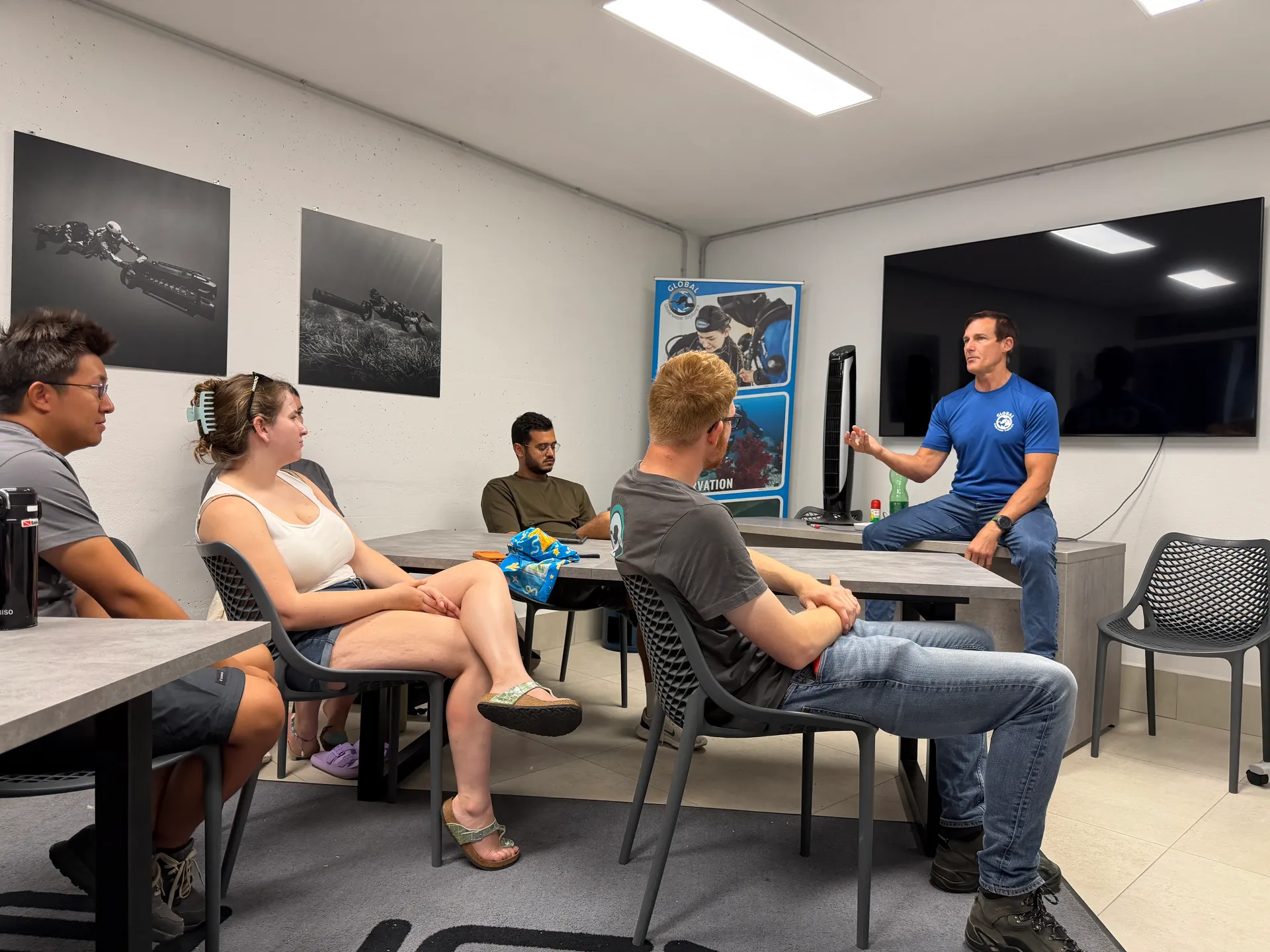
"First, reach out to people who share your interests. Network, learn, and be genuinely present. Second, constantly reevaluate where you are and what your plans are for the next year. Be careful not to fall into the sunk cost fallacy — just because you've invested time in something doesn't mean you should keep investing if it's no longer aligned with your values."
Jarrod Jablonski shared that he gives himself three-year evaluations: if the path still works, he continues; if not, he changes course. This approach has let him build a career aligned with his values — balancing adventure, financial stability, and the ability to contribute meaningfully to others.
When asked about the tension between wanting experiences and needing money to fund them, Jarrod Jablonski offered practical wisdom: "All extremes are easy, but balance is hard. You need to find the opportunities. If you want to travel, become a scuba instructor and work in different locations. But be honest with yourself — can you commit to this long-term, or will you be miserable after a month?"
Jarrod Jablonski then presented a Success Framework he and Jennifer Thomson had developed, built around four pillars:
- Personal Priorities — What matters most to you? (Family, adventure, financial security, impact?)
- Life Standards — What are your baseline financial and lifestyle requirements?
- Contribution to Others — How do you want to make a difference in the world?
- Mastery — What knowledge, skills, and character do you want to develop?
Jennifer Thomson herself exemplified this framework. Her goal was to become a GUE instructor, but she understood the goal itself wasn't the end — the journey was what mattered. She structured her path with abstract aspirations (become a GUE instructor) alongside quantifiable milestones (specific courses, certifications, skills) — a combination that kept her both inspired and grounded.
That afternoon, we visited Sa Gologne, the sacred spring where all of Sardinia's water originates. Standing at the entrance of this underground cathedral of water, surrounded by the team I'd come to know so well, I felt the full weight and beauty of what we'd been learning.
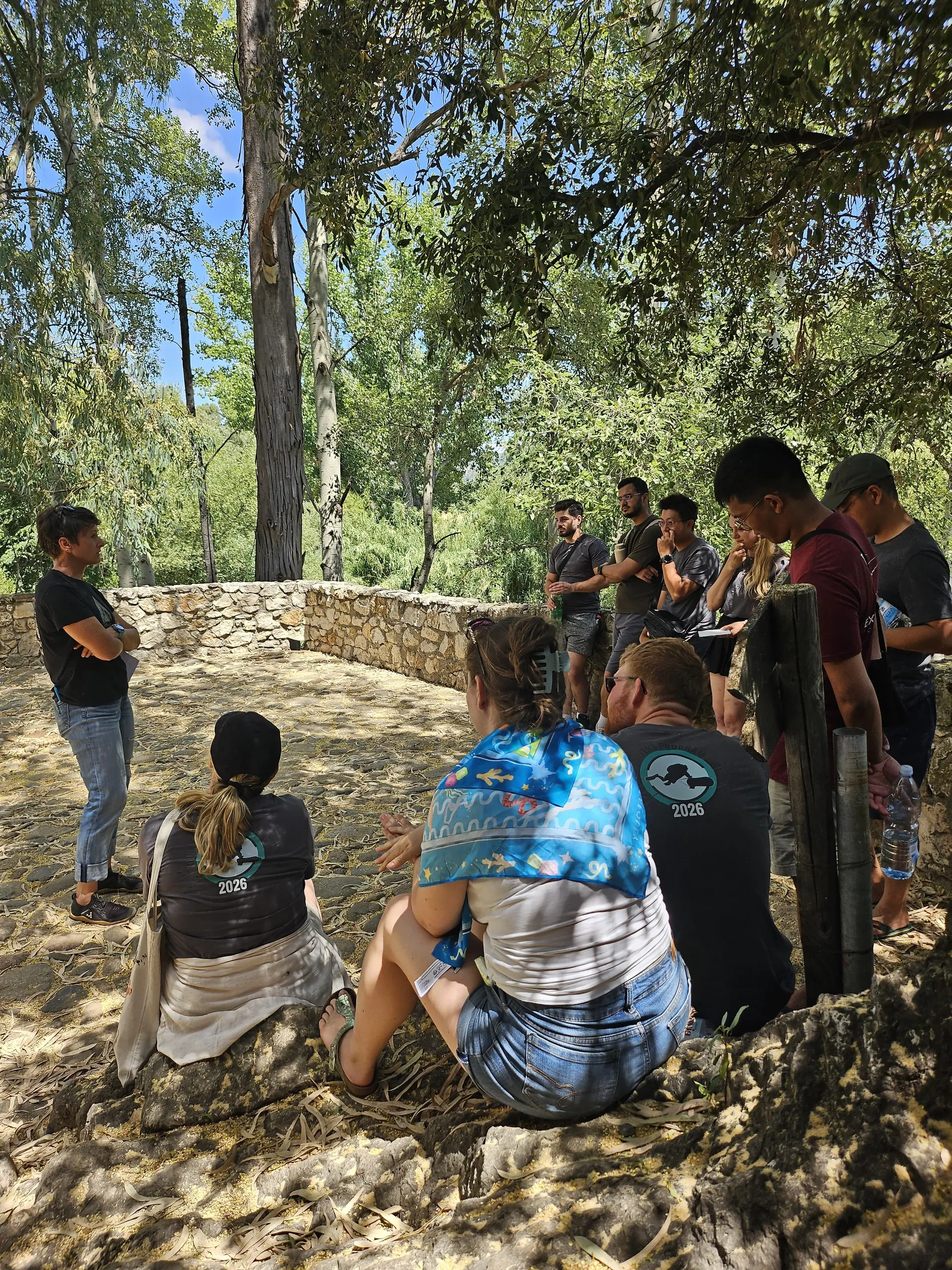
We weren't just becoming better divers; we were learning how to live intentionally.
Presenting the Results: Delivery Time
Since we needed a screen to present our work, we headed back to baseline's classroom to showcase the results. In the meantime, I'd prepared a short trailer presenting our results in a cinematic style.
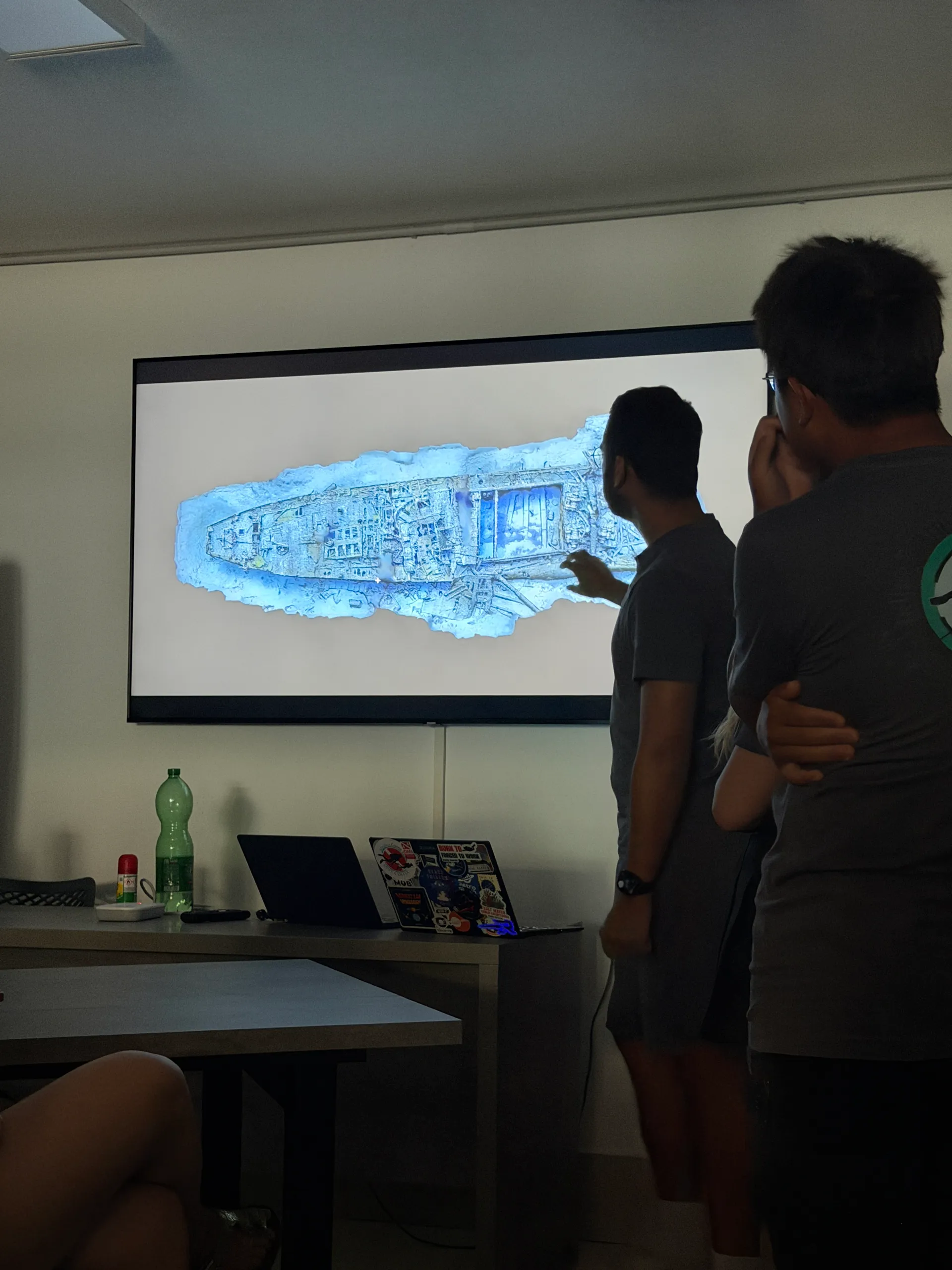
Final result: KT-12 Wreck
All of the organizers were pleasantly surprised by what we'd achieved. You can see the full project here: KT-12 Wreck
That evening, we gathered for a final dinner and filmed testimonials. I asked Dorota Czerny one last time for her advice. As she spoke about her journey, her commitment to excellence, and her belief in each of us, her words hit exactly the right note — she surfaced something in me I'd never quite seen before, yet knew was deeply there. It's something I'll never forget, and one of the most meaningful things I carry from this week.
Key Learning: Career and life success isn't about one perfect choice or path. It's about constant, conscious reevaluation — knowing your non-negotiables, being willing to pivot, and always asking yourself: "Is this still aligned with who I want to be?"
Reflection: What This Week Meant
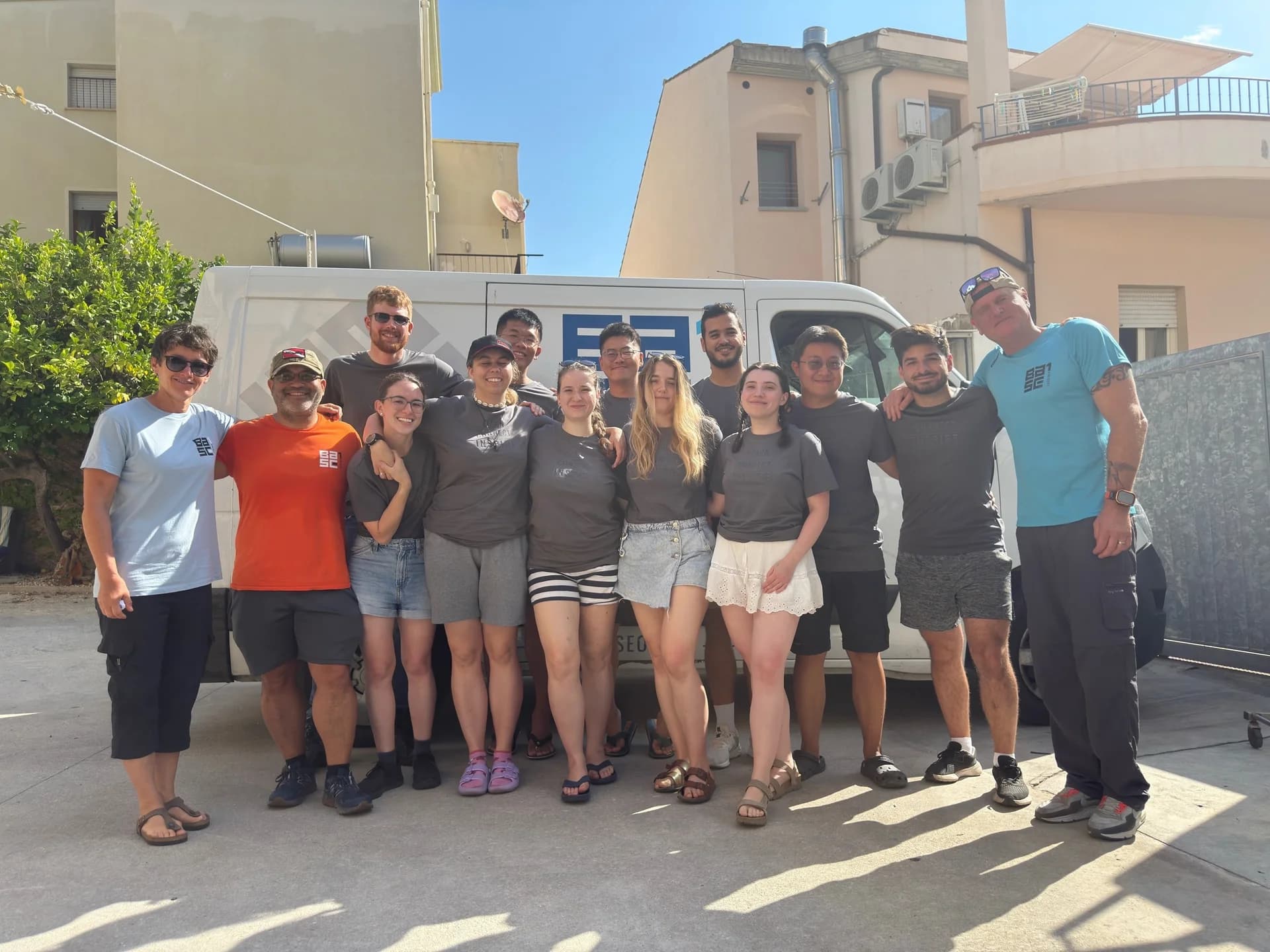
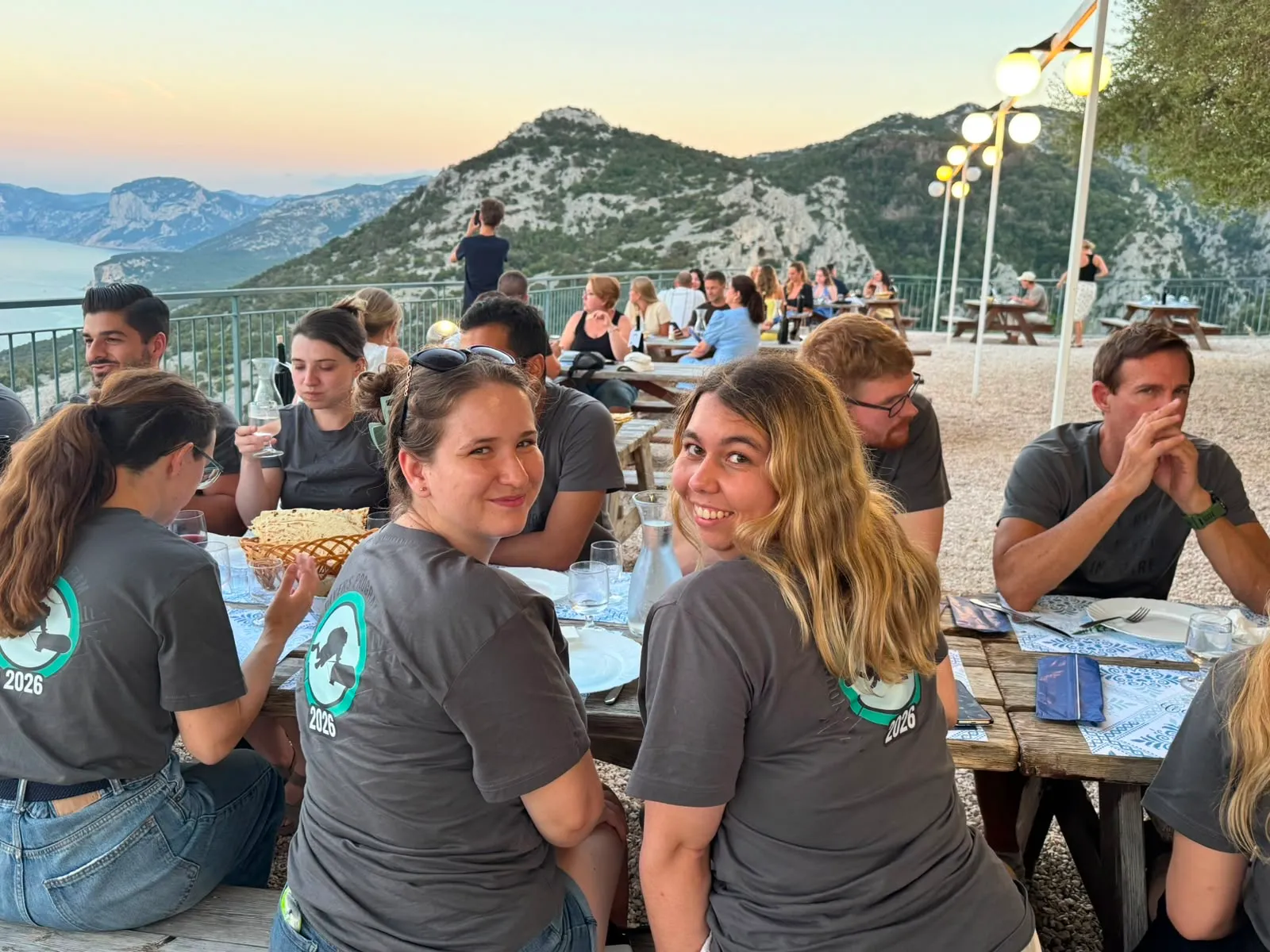
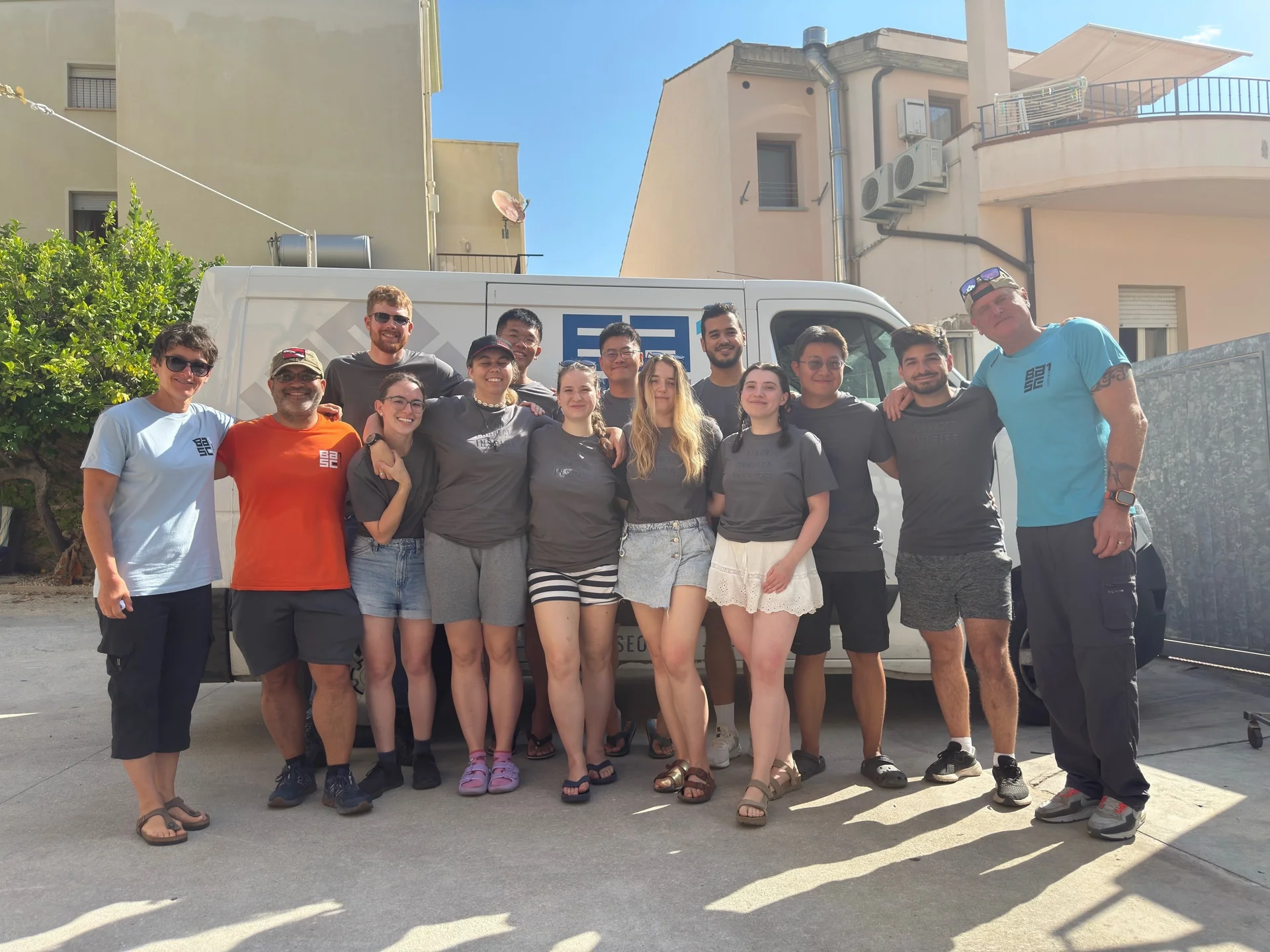
Looking back on this week, I'm struck by how much can change in five days when you're surrounded by people genuinely committed to growth. We arrived as strangers from different parts of the world, bonded only by our love of diving. We left as something closer to a family.
The GUE Young Diver Program wasn't a certification course or a technical training intensive. It was something more subtle and more powerful: an invitation to examine who we are, what we're capable of, and what kind of divers — and people — we want to become. Through the mentorship of Dorota Czerny, jp bresser, Jennifer Thomson, Michael Daniels, and Jarrod Jablonski, we learned that excellence isn't about perfection. It's about intention, preparation, adaptability, and the willingness to grow through failure.
We learned that character — the Strength of Heart, Strength of Will, and Strength of Mind — is built through vulnerability and community. We learned that career success comes from constantly asking yourself tough questions and being willing to change course. And we learned that the diving itself is almost incidental; what matters is the person you become in the process of learning.
I came to Sardinia hoping to learn about diving and film production. What I found instead was a mirror reflecting my own capacity for growth, resilience, and transformation — and nine other people who challenged me to be better, and who, in return, I got to watch become better too.
Dorota was right. The future is in our hands. And after this week, I'm ready to decide what to do with it.
Thank you to Jennifer Thomson, jp bresser, Dorota Czerny, Michael Daniels, Jarrod Jablonski, and every instructor and staff member who made this week possible. Thanks to baseline for hosting this event. Thank you to Koen van der Lee , Eason Jiang, Bijan Faghfouri, Oana Beatrice, Alicja Ulejczyk, Linda Jarkovska, Hank Wu, Harry Wu and Veronika Paulovicova being the kind of people who make vulnerability safe and growth possible. A special thanks to Alicja Ulejczyk for running all the interviews with everyone, and to Bijan Faghfouri and Harry Wu for the amazing dish they prepared. And thank you to Sardinia, to the Mediterranean, and to the underwater world that keeps calling us deeper.
Stay tuned — a video is coming soon.
Keep reading